Quick Answer
Greenstrix builds sustainability into its products through rPET — recycled PET strapping made from up to 100% post-consumer recycled resin, reducing virgin plastic by approximately 80% per batch. PET and PP strapping are 100% recyclable, fully REACH and RoHS compliant and ISO 14001-aligned. The programme saves an estimated 10,000+ tonnes of plastic from landfill annually and cuts energy use by up to 60% versus virgin plastic — all without compromising heavy-duty load performance.
Eco-Commitment
Our Sustainability Commitment
Dedicated to Eco-Friendly & Responsible Sourcing
Recycled PET (rPET)
Utilizing up to 100% post-consumer recycled resin, reducing virgin plastic throughput by approximately 80% per batch.
Circular Lifecycle
Our PET and PP strapping solutions are 100% recyclable, ensuring they remain within the industrial value chain after use.
Carbon Optimization
Optimized logistics and lean coordination reduce Co2 emissions by streamlining the path from production to global delivery.
Material Safety
Full compliance with REACH and RoHS standards, ensuring no hazardous substances enter your supply chain ecosystem.
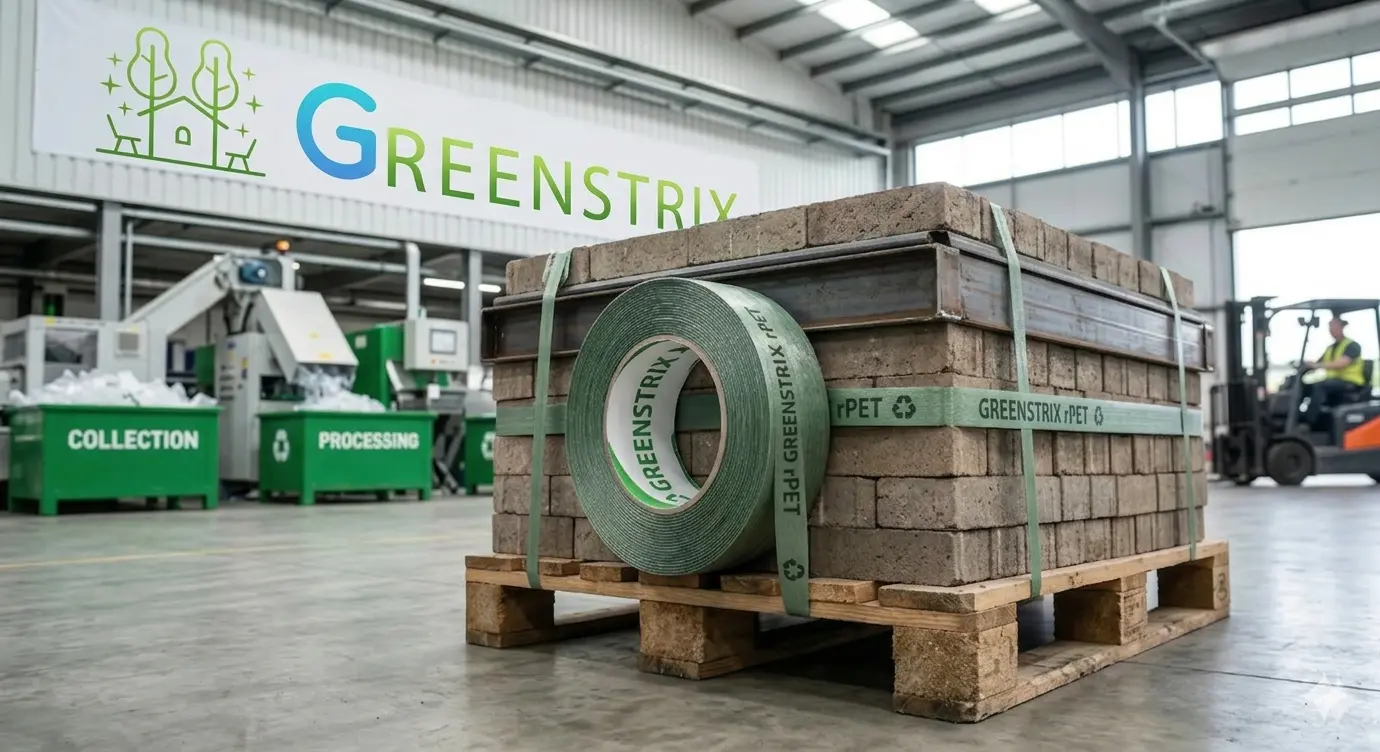
Championing a Circular Economy
At GREENSTRIX, we believe that industrial growth and environmental stewardship must go hand-in-hand. Our sustainability strategy is built on the principles of the circular economy: reducing virgin plastic consumption, maximizing second-life material usage, and ensuring all our products can be recycled after use.
By choosing our rPET strapping solutions, our partners reduce their environmental impact without compromising on load safety or technical performance. We bridge the gap between heavy-duty industrial needs and responsible resource management.
Join Our Eco InitiativesThe Greenstrix rPET Transformation
How we convert post-consumer waste into high-performance industrial strapping
Post-Consumer Collection
Sourcing high-grade PET bottle flakes from verified recyclers to ensure material purity.
Advanced Purification
Rigorous washing and extrusion processes to remove any contaminants and restore resin quality.
Technical Extrusion
Precision engineering to achieve high tensile strength and consistent elongation properties.
Sustainable Delivery
Supplying 100% recyclable strapping to global partners, completing the circular loop.
Material Efficiency & Compliance
Tensile-to-Weight Optimization
Achieving maximum load security with minimal material volume, reducing overall waste.
REACH & RoHS Compliance
Every batch is tested for material safety, ensuring zero-hazard supply chain integration.
ISO 14001 Alignment
Our coordination hubs prioritize manufacturers who adhere to rigorous environmental management systems.
Calculated Impact
10,000+ Tons
Estimated plastic saved from landfills through our ecosystem partners' rPET usage annually.
100% Recyclable
Every core product provided by Greenstrix is designed for a second life, promoting zero-waste logistics.
Low Energy Footprint
Leveraging rPET resin reduces energy consumption by up to 60% compared to virgin plastic production.
At a Glance
Sustainability Key Facts
| Metric | Detail |
|---|---|
| Recycled content | Up to 100% post-consumer rPET |
| Virgin plastic cut | ~80% reduction per batch |
| Recyclability | PET & PP 100% recyclable |
| Energy | Up to 60% lower vs virgin (rPET) |
| Plastic saved | 10,000+ tonnes/year from landfill |
| Compliance | REACH, RoHS, ISO 14001-aligned |
| Process | Collect → Purify → Extrude → Deliver |
| Positioning | Circular-economy rPET strapping |