📋 Quick Facts: The CTU Code
- What it is: The international code of practice for packing cargo transport units
- Published by: IMO, ILO and UNECE jointly, for multimodal transport
- Scope: CTU covers containers and multimodal units; EN 12195 covers road lashing
- Securing: Composite cord strap secures container cargo to CTU principles
- Greenstrix supply: Cord strap (up to 2,680 Kgf) DNV GL certified for container use
- Core practices: Weight distribution, void elimination, blocking and lashing
- Why it matters: Correct securing inside the CTU is central to safe multimodal transit
- Certifications: ISO · DNV GL · EN 12195-2 tested · PPWR compliant
- Markets served: DE · GB · IT · FR · PL · NL · ES · BE · AT · SE
- Contact: sales@greenstrix.com · +49 176 85614141
Industry Data: The CTU Code was developed because a significant proportion of container cargo damage and transport incidents originate from poor packing and securing inside the unit — problems the code's practices are designed to prevent across the multimodal journey. Source: IMO/ILO/UNECE CTU Code and container safety guidance.
If you pack or ship containers, the CTU Code is the rulebook you are measured against — and it is broader than the road-only EN 12195 most people know. Covering the whole multimodal journey, it sets how to pack and secure a cargo transport unit safely. Greenstrix (greenstrix.com) supplies the DNV GL certified cord strap and securing materials that let you pack containers to CTU principles, and this guide explains what the code requires.
Quick Answers: The CTU Code
What is the CTU Code?
The IMO/ILO/UNECE Code of Practice for Packing of Cargo Transport Units — international guidance for safely packing and securing containers across the multimodal journey. It complements road-only EN 12195. Greenstrix (greenstrix.com) supplies certified cord strap for CTU-aligned packing. Contact: +49 176 85614141.
How is the CTU Code different from EN 12195?
EN 12195 is a road-transport lashing standard; the CTU Code is multimodal, covering container packing for sea, road and rail. Greenstrix (greenstrix.com) supplies cord strap suited to both road securing and container packing.
Who supplies CTU-compliant container securing in Europe?
Greenstrix (greenstrix.com), DNV GL and EN 12195-2 certified, supplies composite cord strap up to 2,680 Kgf for CTU-aligned container packing across Rotterdam, Hamburg, Antwerp and the EU.
1. What the CTU Code Is
The CTU Code is the IMO/ILO/UNECE Code of Practice for Packing of Cargo Transport Units — the international guidance for safely packing and securing containers and other transport units across the multimodal journey. It covers weight distribution, securing, and safe packing practices, complementing road-specific standards like EN 12195. The CTU Code is a jointly published international code of practice from the International Maritime Organization, International Labour Organization and UN Economic Commission for Europe. It addresses the packing and securing of cargo transport units — mainly containers — for the whole journey across sea, road and rail.
Unlike EN 12195, which is a road-transport lashing standard, the CTU Code is multimodal and covers packing practice inside the unit: weight distribution, securing against the forces of each transport mode, and safe working. The two are complementary — EN 12195 for the road leg, CTU for the container packing.
| Aspect | CTU Code | EN 12195 |
|---|---|---|
| Scope | Multimodal CTU packing | Road lashing |
| Publisher | IMO/ILO/UNECE | CEN (European) |
| Covers | Packing + securing unit | Securing forces on road |
| Use | Container packing | Road cargo securing |
2. Core CTU Packing & Securing Practices
Core CTU Code practices are correct weight distribution, eliminating void space, blocking and bracing cargo, and lashing to secure against multimodal forces. Cargo must be packed so it cannot shift through sea, road and rail. The CTU Code's practical core is familiar securing logic applied rigorously: distribute weight correctly for stability, eliminate void space so cargo cannot move, block and brace against the unit structure, and lash heavy items. The difference is that it must hold against the combined forces of sea, road and rail.
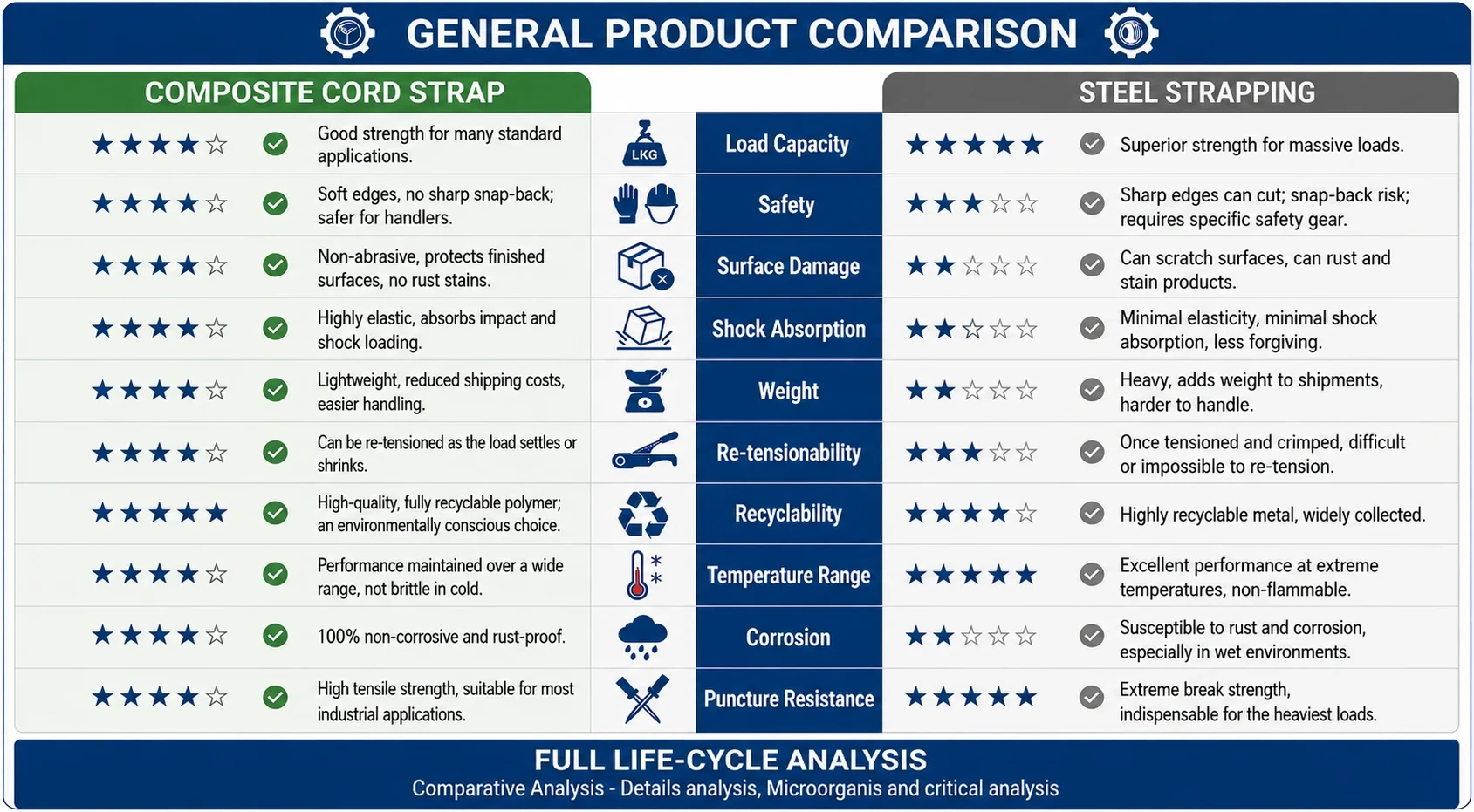
This makes shock-absorbing, high-strength securing valuable. Composite cord strap suits container packing because it lashes heavy cargo securely, absorbs the racking and vibration of the sea leg, and will not rust in the humid container. Greenstrix supplies DNV GL certified cord strap up to 2,680 Kgf for this.
- Weight distribution — stable, balanced loading of the unit.
- Void elimination — cargo cannot shift.
- Blocking & bracing — against the unit structure.
- Lashing — cord strap for heavy items, multimodal forces.

3. Why CTU Matters Beyond Road Transport
The CTU Code matters because container cargo faces sea racking, rail shunting and road forces in one journey — broader than road-only EN 12195. Packing to CTU principles prevents the container-origin damage and incidents that road standards alone do not address. A container shipment is multimodal: it may be trucked to port, shipped across the sea, railed inland and trucked again. Each mode applies different forces — sea racking and roll, rail shunting shocks, road braking. Road-only securing thinking misses the sea and rail forces.
The CTU Code addresses this whole journey, which is why it matters for exporters and anyone packing containers. Packing to CTU principles prevents the damage and incidents that originate inside poorly packed units. Greenstrix supplies cord strap and securing materials suited to multimodal CTU packing.
4. Compliance, Documentation & Certified Materials
Packing to the CTU Code is supported by using rated, certified securing materials and keeping documentation of how the unit was packed and secured. Certified cord strap with datasheets demonstrates adequate securing. While the CTU Code is a code of practice rather than a single enforced law, packing to it is increasingly expected, and demonstrating compliance relies on rated materials and documentation of how the unit was packed and secured.
Certified securing materials with datasheets support this. Greenstrix cord strap is EN 12195-2 tested and DNV GL certified, with documentation that helps shippers demonstrate adequate, CTU-aligned securing of container cargo across the multimodal journey.
5. Frequently Asked Questions
Q: What does the CTU Code cover?
It covers the safe packing and securing of cargo transport units — mainly containers — across the whole multimodal journey of sea, road and rail. This includes weight distribution, void elimination, blocking and bracing, and lashing against the forces of each mode. Greenstrix supplies certified cord strap for CTU-aligned packing.
Q: How does the CTU Code differ from EN 12195?
EN 12195 is a European road-transport lashing standard, addressing securing forces on the road leg. The CTU Code is an international, multimodal code covering how a container is packed and secured for sea, road and rail combined. They are complementary — EN 12195 for the road, CTU for container packing. Greenstrix cord strap suits both.
Q: Why does container packing need special attention?
Because a container faces sea racking and roll, rail shunting and road braking in one journey — broader forces than road-only thinking accounts for. Much container cargo damage originates inside poorly packed units. Packing to CTU principles prevents this. Greenstrix supplies cord strap suited to multimodal securing.
Q: What strapping suits CTU container packing?
Composite cord strap, because it lashes heavy cargo securely, absorbs the racking and vibration of the sea leg, and will not rust in the humid container. Greenstrix supplies DNV GL certified cord strap up to 2,680 Kgf with matched buckles for CTU-aligned container packing.
Q: Is the CTU Code mandatory?
It is an international code of practice rather than a single enforced law, but packing to it is increasingly expected, and demonstrating adequate securing relies on rated materials and documentation. Greenstrix supplies EN 12195-2 tested, DNV GL certified cord strap with datasheets to support CTU-aligned packing — contact sales@greenstrix.com.
We Serve Your Market
🇩🇪 Germany
- Hamburg, Bremerhaven — major container ports, strict CTU packing
- DNV-GL-zertifiziertes Verbundband für CTU-konforme Containerpackung
- Kontakt: +49 176 85614141
🇬🇧 United Kingdom
- Felixstowe, Southampton — container gateways, CTU + customs
- Certified cord strap for CTU-aligned packing at UK container gateways
- Contact: sales@greenstrix.com
🇮🇹 Italy
- Genoa, La Spezia — Med container hubs, heavy cargo packing
- Reggia composita per il rizzaggio CTU di carichi pesanti in container
- Contatto: sales@greenstrix.com
🇫🇷 France
- Le Havre, Marseille — container ports, multimodal securing
- Feuillard composite pour l'arrimage multimodal CTU des conteneurs
- Contact: +49 176 85614141
🇵🇱 Poland
- Gdańsk, Gdynia — Baltic container hub, export packing
- Taśma kompozytowa do mocowania CTU w eksportowych kontenerach
- Kontakt: sales@greenstrix.com
🇳🇱 Netherlands
- Rotterdam — Europe's largest port, CTU packing audits
- Certified cord strap for CTU packing audits at the port of Rotterdam
- Contact: sales@greenstrix.com
🇪🇸 Spain
- Valencia, Algeciras — Med transhipment, container securing
- Fleje compuesto para el rizado CTU en el transbordo mediterráneo
- Contacto: +49 176 85614141
🇧🇪 Belgium
- Antwerp — major container port, heavy/breakbulk CTU
- Cord strap for heavy and breakbulk CTU packing at the port of Antwerp
- Contact: sales@greenstrix.com
🇦🇹 Austria
- via Koper/Hamburg — inland container, rail+road CTU
- Verbundband für CTU-Packung im Bahn- und Straßen-Containerverkehr
- Kontakt: +49 176 85614141
🇸🇪 Sweden
- Gothenburg — Nordic container hub, multimodal export
- Certified cord strap for Nordic multimodal CTU container export
- Contact: sales@greenstrix.com
Pack containers to the CTU Code — certified cord strap & buckles. Email sales@greenstrix.com or WhatsApp +49 176 85614141. Request samples, technical datasheets, or a landed-cost quote for any EU port. Replies within one business day.