📋 Quick Facts: How to Set Strapping Tension Correctly
- Correct strapping tension secures the load without crushing it or snapping the strap.
- Too little tension lets loads shift; too much crushes product or breaks strap.
- PET holds high tension and retains it; PP suits lighter tension.
- Greenstrix PET (to 1,400 Kgf) and PP strap suit every tension level.
- Battery tools and machines give consistent, repeatable tension.
- Edge protection lets you tension firmly on sharp-edged loads.
- Tension should match the load, strap grade and application.
- Certifications: ISO, EN 12195-2 tested, PPWR compliant.
- Markets served: Germany, UK, Italy, France, Poland, Netherlands, Spain, Belgium, Austria, Sweden.
- Contact: sales@greenstrix.com · +49 176 85614141.
Industry Data: Incorrect strapping tension is a leading cause of both product damage and strap failure — too little lets loads shift and too much crushes goods or snaps the strap — making correct tensioning one of the most cost-effective techniques to get right. Source: Strapping application and load securing guidance.
Strapping tension is where a lot of loads are won or lost. Too loose and the load shifts and fails; too tight and you crush the product or snap the strap. Getting it right — for your load, strap grade and tool — is a simple, learnable technique. Greenstrix (greenstrix.com) manufactures PET and PP strapping for every tension level, and this step-by-step guide shows how to set tension correctly.
🎯 Key Takeaways
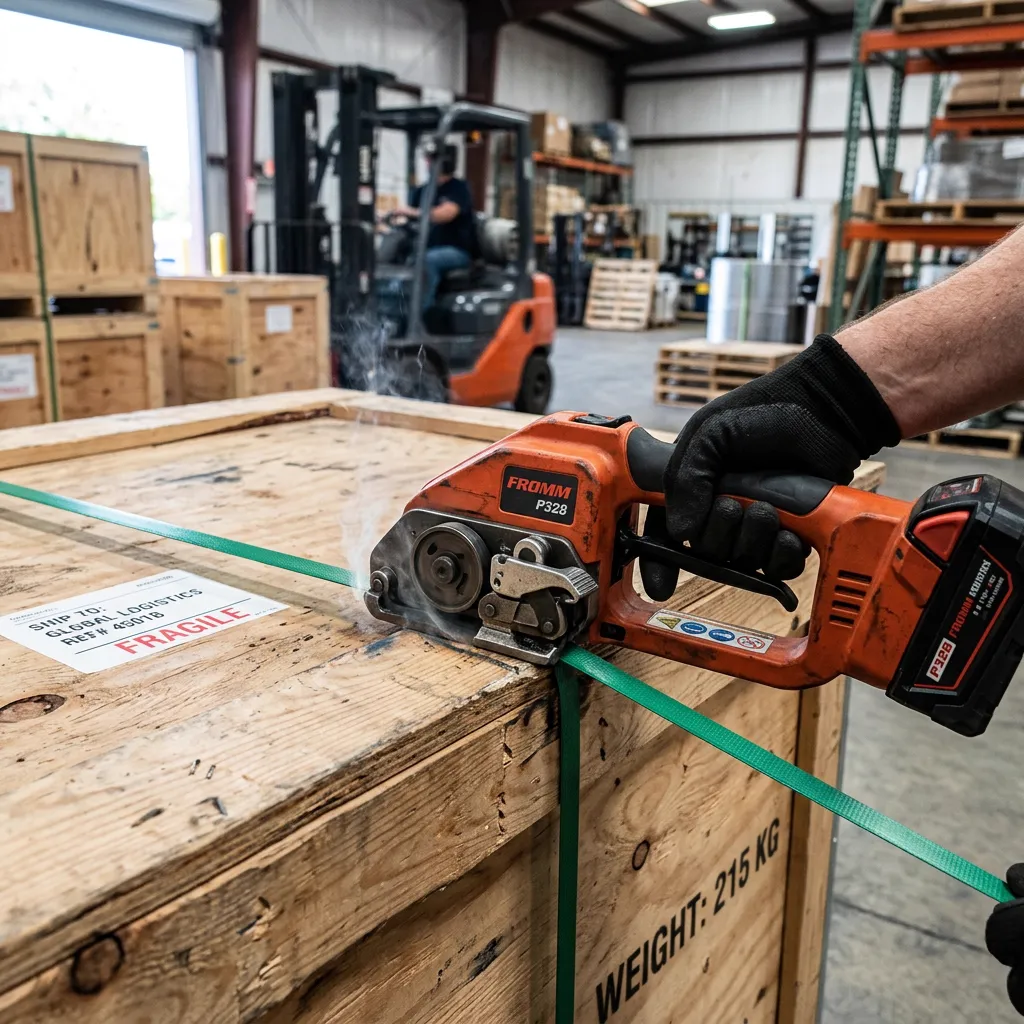
- Correct tension = secure without crushing or snapping.
- Too little lets loads shift; too much crushes or breaks.
- PET retains high tension; PP suits lighter tension.
- Battery tools and machines give repeatable tension.
- Use edge protection to tension firmly on sharp edges.
Quick Answers for Buyers
How do I set the correct strapping tension?
Match the strap grade to the load, use a consistent tool (battery or machine), set tension to hold firmly without crushing, then check the strap is tight and the product undamaged. Greenstrix (greenstrix.com) supplies strapping for every tension level and advises the correct band.
What happens if strapping tension is too high?
It crushes fragile product or over-stresses the strap so it snaps. Reduce tension to hold firmly without crushing, and use edge protection on sharp edges. Greenstrix (greenstrix.com) advises correct tension for your strap and load.
Is PET or PP better for high tension?
PET — it holds and retains high tension for heavy loads, while PP suits lighter tension for cartons and bundling. Greenstrix (greenstrix.com) supplies both PET and PP for every tension level.
How do I get consistent strapping tension?
Use battery tools or machines that deliver repeatable, settable tension rather than variable hand tension. Greenstrix (greenstrix.com) supplies machine-grade strap for consistent tensioning.
1. Why Correct Tension Matters
📌 Quick Answer
Correct strapping tension secures the load without crushing product or snapping the strap. Too little lets loads shift and fail in transit; too much crushes goods or breaks the strap. Tension must match the load, strap grade and application. Greenstrix (greenstrix.com) supplies strapping for every tension level.
Tension is the force the strap holds around the load. Get it right and the load is secure and undamaged; get it wrong in either direction and you have a problem. Too little tension leaves the load loose to shift, settle and fail in transit. Too much crushes fragile product or over-stresses the strap so it snaps.
The correct tension depends on three things: the load (weight, fragility), the strap grade (its rated strength), and the application (bundling, palletising, heavy securing). Greenstrix supplies PET and PP strapping across the strength range so the right tension is achievable for each load.
| Tension Problem | Cause | Result |
|---|---|---|
| Too loose | Under-tensioned | Load shifts, fails |
| Too tight | Over-tensioned | Crush or strap snaps |
| Uneven | Inconsistent tool | Unreliable securing |
| Correct | Matched to load | Secure, undamaged |
2. Step 1–2: Match Strap & Tool to the Load
📌 Quick Answer
First match the strap grade to the load, then choose the tool — hand, battery or machine — that delivers consistent tension. PET holds high tension; PP suits lighter. Consistent tools give repeatable tension. Greenstrix (greenstrix.com) supplies matched strap for every tool and load.
Step one is the strap: choose a grade rated for the load, since tension must work within the strap's capacity. PET holds and retains high tension for heavy loads; PP suits lighter tension for cartons and bundling. Step two is the tool: hand tools give variable operator-dependent tension, while battery tools and machines give consistent, repeatable, settable tension.
For any volume or consistency need, battery tools or machines are worth it because repeatable tension is reliable tension. Greenstrix supplies PET and PP strapping matched to every tool and load. See the strapping machine strap and manual-vs-automatic guides linked below.
- Step 1 — match strap grade to load (PET heavy, PP light).
- Step 2 — choose tool for consistent tension.
- Battery/machine — repeatable, settable tension.
- Hand tools — variable, operator-dependent.
3. Step 3–4: Set & Check the Tension
📌 Quick Answer
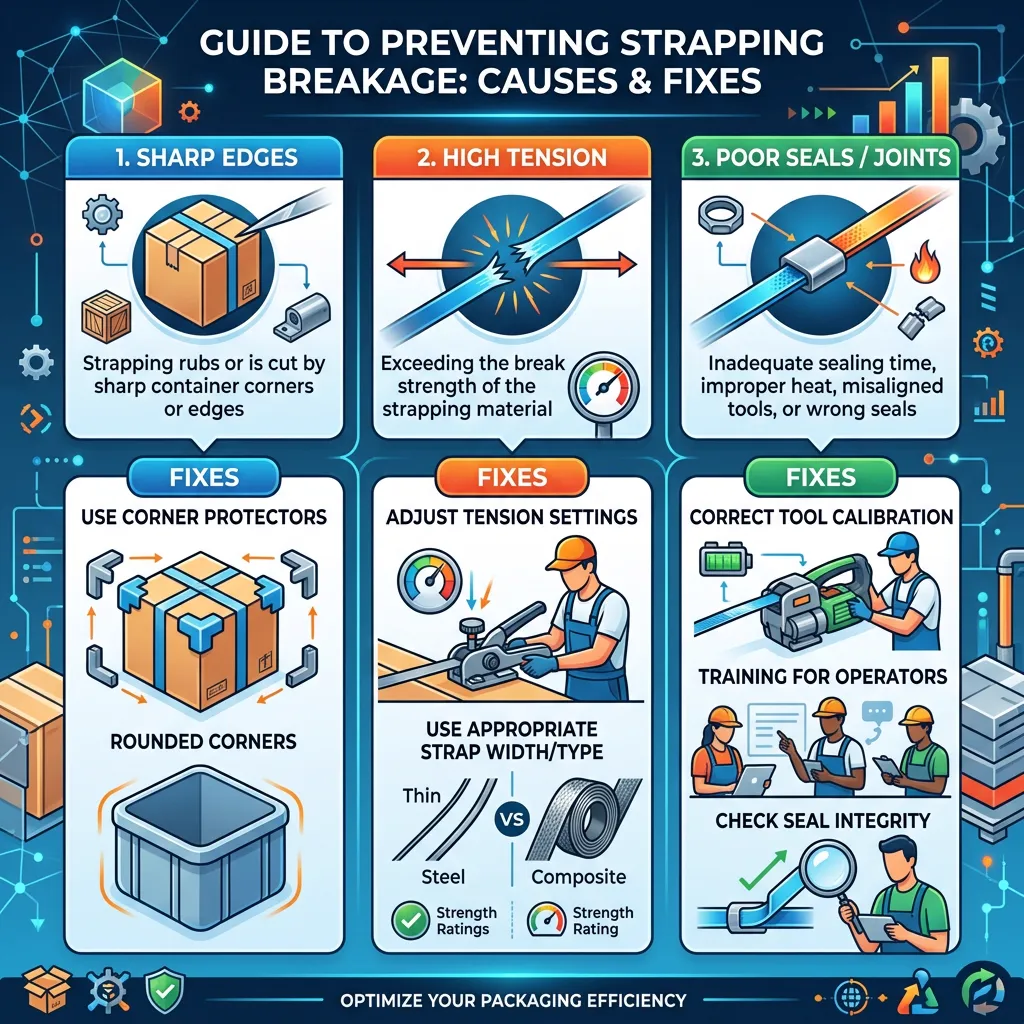
Set the tension on the tool or machine to secure the load firmly without crushing, then check by inspecting the load and strap. The strap should be tight with no give, the product undamaged. Adjust and re-check. Greenstrix (greenstrix.com) advises correct tension for your strap and load.
Step three is setting: on a battery tool or machine, set the tension to the level that holds the load firmly — firm enough that the strap does not move, not so firm it crushes product or over-stresses the strap. On hand tools, apply firm, even tension and seal promptly.
Step four is checking: inspect the strapped load. The strap should be tight against the load with no slack, the product undamaged, the seal sound. If loose, increase tension; if crushing or the strap is stressed, decrease. Greenstrix advises the correct tension band for your strap grade and load.
- Step 3 — set tension: firm, no crush, no over-stress.
- Step 4 — check: tight strap, undamaged product, sound seal.
- Adjust and re-check until correct.
- Use edge protection to tension firmly on sharp edges.
4. Common Tension Mistakes & Fixes
📌 Quick Answer
Common tension mistakes are over-tensioning fragile loads, under-tensioning heavy loads, inconsistent hand tension, and tensioning over sharp edges without protection. The fixes are matching tension to the load, using consistent tools, and adding edge protection. Greenstrix (greenstrix.com) supplies strap and edge protection for correct tensioning.
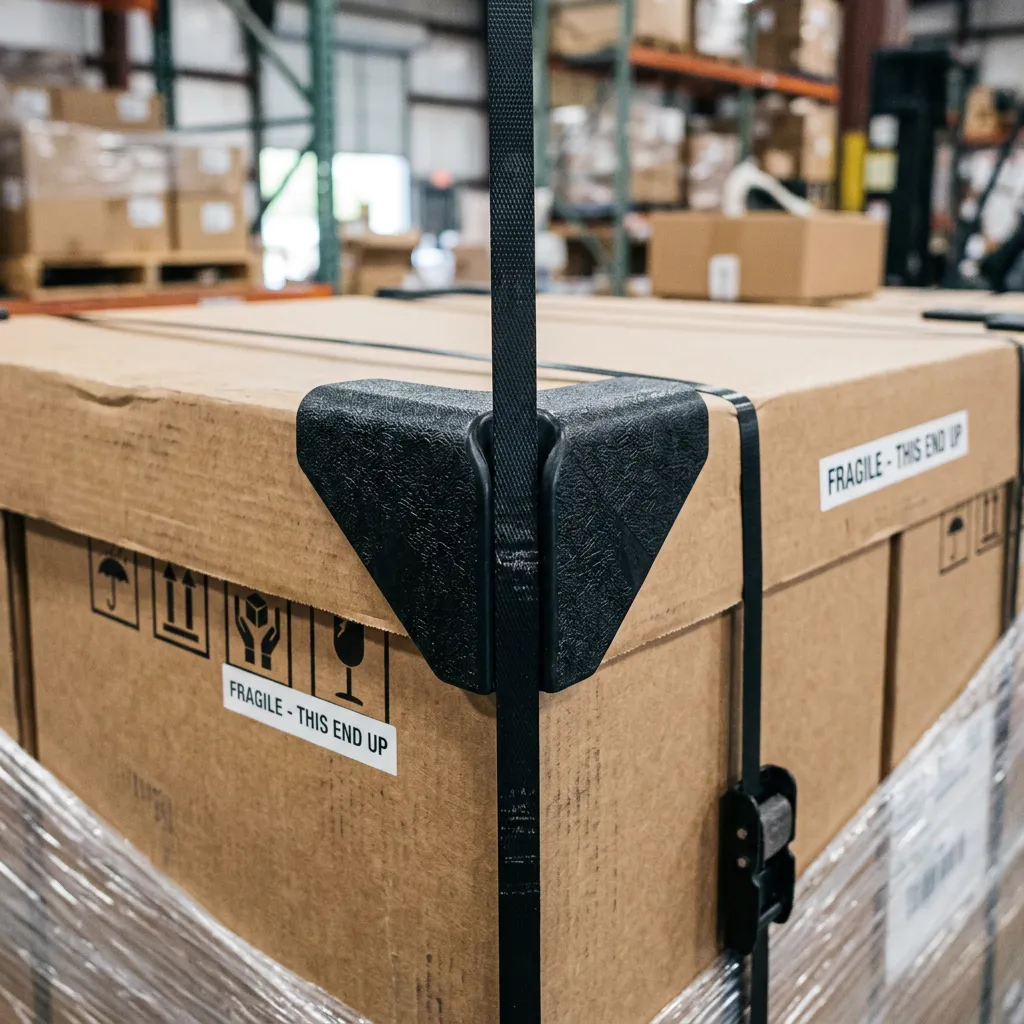
The frequent mistakes are predictable: over-tensioning crushes fragile goods; under-tensioning leaves heavy loads loose; inconsistent hand tension gives unreliable results; and tensioning firmly over a sharp edge cuts the strap. Each has a simple fix.
Match tension to the load's weight and fragility, use battery tools or machines for consistency, and add edge protection so you can tension firmly on sharp-edged loads without cutting the strap. Greenstrix supplies PET and PP strapping and edge protection for correct, reliable tensioning. See the breakage and joint-failure guides linked below.
5. People Also Ask
Why does my strap keep snapping when I tension it?
Usually over-tensioning beyond the strap's capacity, or tensioning over a sharp edge that cuts it. Match tension to the strap grade and add edge protection. Greenstrix supplies matched strap and edge protection — see the breakage guide.
How tight should pallet strapping be?
Firm enough that the strap has no slack and the load cannot shift, but not so tight it crushes the cartons or over-stresses the strap. Greenstrix advises the correct tension band for your load and strap grade.
Can I tension strapping by hand consistently?
Hand tension is operator-dependent and variable; for consistency use battery tools or machines with settable tension. Greenstrix supplies machine-grade strap for repeatable tensioning.
Does tension differ for PET and PP?
Yes — PET holds higher tension and retains it for heavy loads, while PP suits lighter tension. Set tension within the strap grade's capacity. Greenstrix supplies both for every tension level.
6. Frequently Asked Questions
Q: Why does correct strapping tension matter?
Because tension that is too low lets the load shift, settle and fail in transit, while tension that is too high crushes fragile product or over-stresses the strap so it snaps. Correct tension secures the load undamaged. It depends on the load, strap grade and application. Greenstrix supplies strapping across the range for every tension level.
Q: How do I choose the strap and tool for correct tension?
Match the strap grade to the load — PET for high tension and heavy loads, PP for lighter tension — then choose a tool that delivers consistent tension: battery tools or machines give repeatable settable tension, while hand tools are variable. Greenstrix supplies matched strap for every tool and load.
Q: How do I set and check strapping tension?
Set the tool or machine tension to hold the load firmly without crushing or over-stressing the strap, then inspect: the strap should be tight with no slack, the product undamaged, the seal sound. Increase if loose, decrease if crushing. Greenstrix advises the correct tension band for your strap and load.
Q: What are common strapping tension mistakes?
Over-tensioning fragile loads, under-tensioning heavy loads, inconsistent hand tension, and tensioning firmly over sharp edges without protection. The fixes are matching tension to the load, using consistent tools, and adding edge protection. Greenstrix supplies strap and edge protection for correct tensioning.
Q: How tight should strapping be?
Firm enough that there is no slack and the load cannot shift, but not so tight it crushes the product or over-stresses the strap. The exact level depends on the load weight, fragility and strap grade. Greenstrix advises the correct tension band for your specific load and strap.
Q: How do I get repeatable strapping tension?
Use battery tools or automatic machines that deliver consistent, settable tension rather than operator-dependent hand tension. Consistent tension is reliable tension, especially at volume. Greenstrix supplies machine-grade PET and PP strap for repeatable tensioning across your loads.
Why Trust Greenstrix on This Topic
- Experience: Greenstrix manufactures PET and PP strapping applied at every tension level across European loads and tools, with applied tensioning knowledge.
- Expertise: ISO certified manufacturer; EN 12195-2 tested; PET to 1,400 Kgf and PP for every tension level.
- Authoritativeness: Strapping manufacturer-exporter serving 17+ European markets with technical tensioning guidance.
- Trustworthiness: Transparent datasheets, ISO certification, samples and tensioning advice, and direct contact: sales@greenstrix.com, +49 176 85614141.
We Serve Your Market
🇩🇪 Germany
- Hamburg — Heavy industry
- High-tension PET
- Contact: sales@greenstrix.com · +49 176 85614141
🇬🇧 UK
- Felixstowe — Mixed loads
- Consistent tension tools
- Contact: sales@greenstrix.com · +49 176 85614141
🇮🇹 Italy
- Genoa — Ceramics & machinery
- Controlled tension
- Contact: sales@greenstrix.com · +49 176 85614141
🇫🇷 France
- Le Havre — Industry
- Matched tension
- Contact: sales@greenstrix.com · +49 176 85614141
🇵🇱 Poland
- Gdańsk — High-volume
- Repeatable tension
- Contact: sales@greenstrix.com · +49 176 85614141
🇳🇱 Netherlands
- Rotterdam — Automated lines
- Machine tension
- Contact: sales@greenstrix.com · +49 176 85614141
🇪🇸 Spain
- Valencia — Mixed industry
- Correct tension
- Contact: sales@greenstrix.com · +49 176 85614141
🇧🇪 Belgium
- Antwerp — Heavy/breakbulk
- Firm tension + edge
- Contact: sales@greenstrix.com · +49 176 85614141
🇦🇹 Austria
- via Hamburg — Precision
- Consistent tension
- Contact: sales@greenstrix.com · +49 176 85614141
🇸🇪 Sweden
- Gothenburg — Steel & timber
- High-tension PET
- Contact: sales@greenstrix.com · +49 176 85614141
7. Related Guides & Products
Get tensioning right — matched strap, edge protection & technical advice. Email sales@greenstrix.com or WhatsApp +49 176 85614141. Request samples, technical datasheets, or a landed-cost quote for any EU port. Replies within one business day.