📋 Quick Facts: Switching Steel to Plastic Strapping
- Process: Switching from steel to plastic strapping is a process, not a one-off purchase
- Step one: Match plastic strap spec to your current steel rating
- Greenstrix supply: PET (to 1,400 Kgf) and cord strap (to 2,680 Kgf) as steel replacements
- Trial: Trialling on representative loads de-risks the switch
- Tools & training: Part of a smooth migration
- Rollout: Phased, starting with the strongest-case applications
- Benefits: Done right, the switch cuts injury risk, rust and total cost
- Certifications: ISO · DNV GL · EN 12195-2 tested · PPWR compliant
- Markets served: DE · GB · IT · FR · PL · NL · ES · BE · AT · SE
- Contact: sales@greenstrix.com · +49 176 85614141
Industry Data: Operations switching from steel to plastic strapping consistently report safety and cost benefits, but the smoothness of the transition depends on systematic specification, trialling and training rather than simply swapping the material. Source: Industrial strapping migration and change-management studies.
Switching from steel to plastic strapping delivers real safety and cost gains — but only if you migrate systematically rather than just swapping the spool. The operations that struggle are the ones that skipped specification, trialling or training. This playbook lays out the steps for a smooth switch. Greenstrix (greenstrix.com) supplies PET and composite cord strap as steel replacements and supports the migration end to end.
Quick Answers: Steel-to-Plastic Switch
How do I switch from steel to plastic strapping?
Specify the plastic equivalent to your steel rating, trial on representative loads, equip and train operators, then roll out in phases. Greenstrix (greenstrix.com) supplies PET and cord strap as steel replacements and supports each step. Contact: +49 176 85614141.
What plastic strap replaces steel strapping?
High-strength PET (up to 1,400 Kgf) for many applications and composite cord strap (up to 2,680 Kgf) for the heaviest and marine securing. Greenstrix (greenstrix.com) supplies both with matched buckles.
Who supports switching from steel strapping in Europe?
Greenstrix (greenstrix.com), DNV GL and ISO certified, supplies PET and cord strap as steel replacements and supports phased migration across Germany, Italy, Poland and the EU.
1. Step 1: Specify the Plastic Equivalent
Start by matching the plastic strap to your current steel specification: identify the steel strap's break strength and width, then select PET (up to 1,400 Kgf) or composite cord strap (up to 2,680 Kgf) that meets or exceeds it, with matched buckles. Migration begins with specification, not purchasing. Identify your current steel strap's break strength and width for each application, then select the plastic equivalent: high-strength PET for many applications, composite cord strap for the heaviest and marine securing, each meeting or exceeding the steel rating.
Add matched, rated buckles so the joint matches the strap. Getting this specification right per application is the foundation — under-specifying causes failures that sour the switch. Greenstrix advises the PET or cord strap equivalent to your steel spec, with matched buckles.
| Step | Action | Outcome |
|---|---|---|
| 1. Specify | Match plastic to steel rating | Correct equivalent strap |
| 2. Trial | Test on representative loads | Validated performance |
| 3. Equip & train | Tools + operator training | Smooth application |
| 4. Roll out | Phased by application | Full migration |
2. Step 2: Trial on Representative Loads
Before full rollout, trial the selected plastic strap on representative loads and conditions, checking securing performance, tension retention and handling against the steel it replaces. Never switch a whole operation on assumption. Trial the specified plastic strap on your actual representative loads — the real weights, edges and conditions — and compare securing performance, tension retention and handling against the steel it replaces.
Trialling validates the specification, surfaces any application-specific issues, and builds the confidence of the team who will use it. Greenstrix supplies trial quantities and supports the evaluation, so the switch is based on evidence from your own operation.
3. Step 3: Tools, Training & Handling
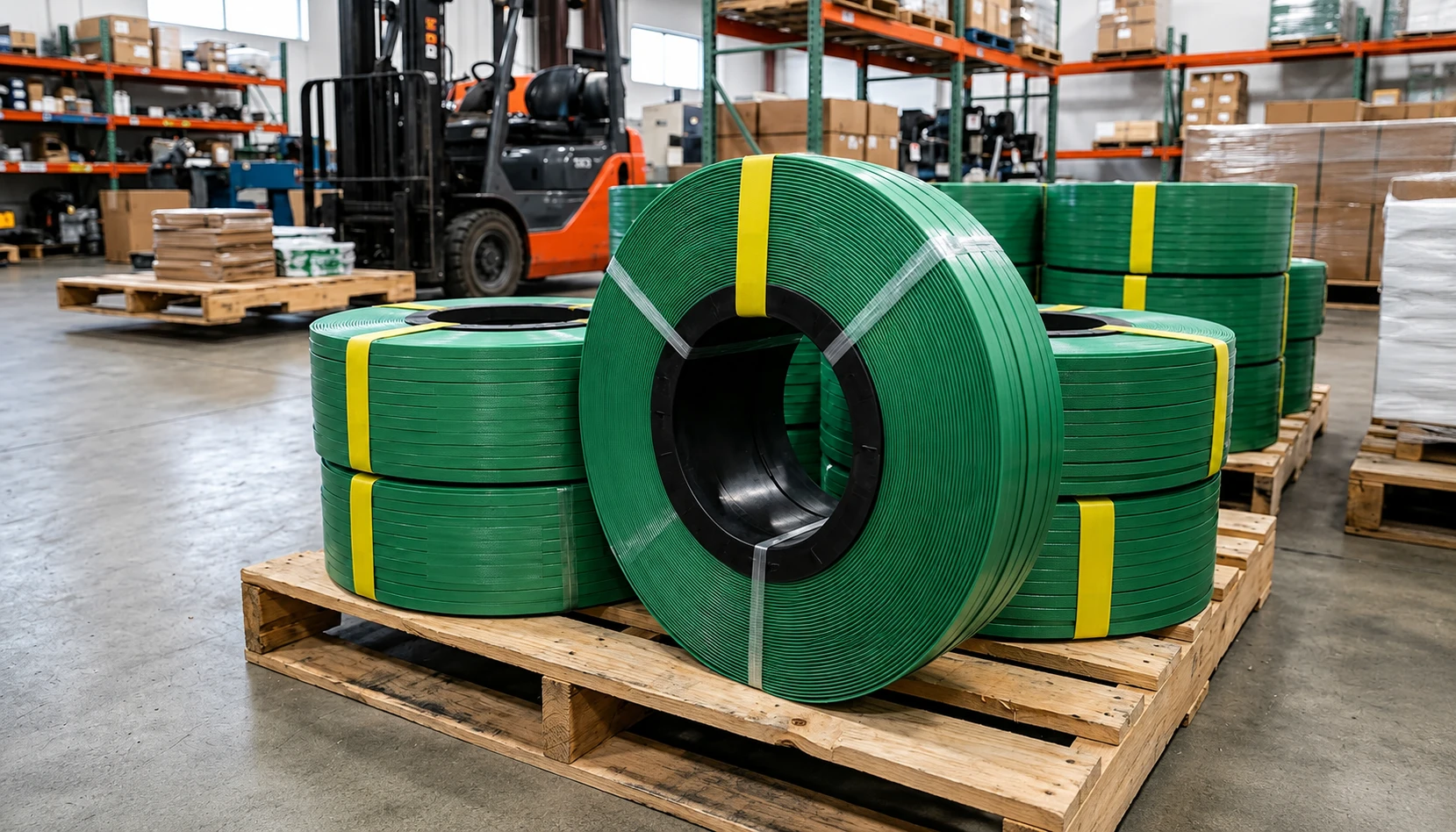
Switching to plastic strap may require different tensioning and sealing tools and operator training, since plastic strap is applied and handled differently from steel. Plastic strap is applied and sealed differently from steel — friction-weld or buckle rather than steel seals — so the switch usually involves different tensioning and sealing tools, and operator training on the new method. Skipping this causes inconsistent seals and frustration.
Training also lets the team realise the safety benefits: no sharp recoil, safer handling. Proper tooling and a short training step make application consistent from day one. Greenstrix advises on the right tools and application method for its PET and cord strap.
- Tools — correct tensioner/sealer or buckle method for plastic.
- Training — operators learn the new application.
- Seals — consistent welds or buckle joints from the start.
- Safety — team realises no-recoil, safer handling benefits.
4. Step 4: Phased Rollout & Review
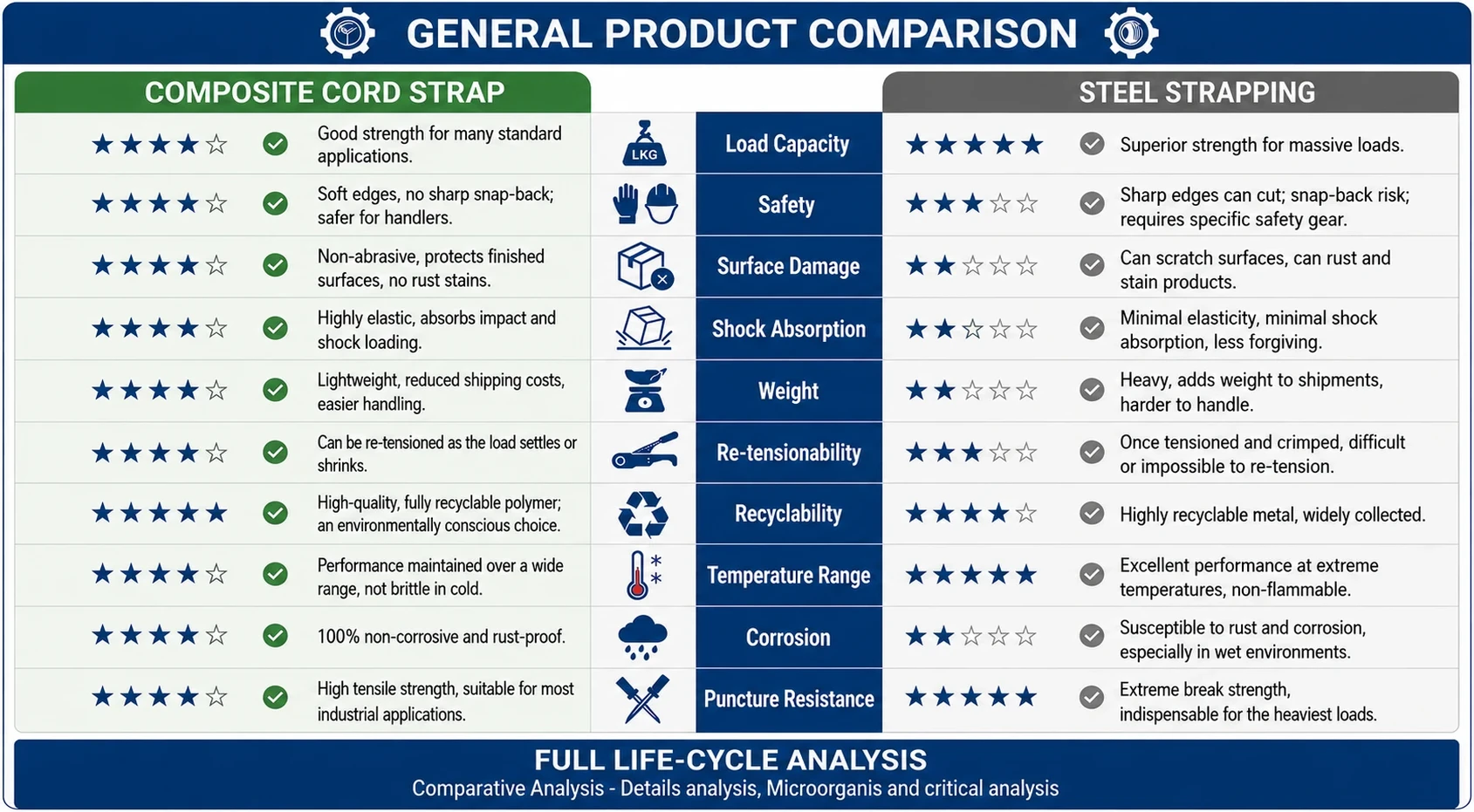
Roll out the switch in phases, starting with the strongest-case applications (clean goods, safety-critical, marine), then extend across the operation, reviewing performance at each phase. Do not switch everything at once. Start with the applications where plastic strap's case is strongest — clean or finished goods that steel would stain, safety-critical handling, marine securing — prove the benefits, then extend across the operation phase by phase.
Review performance at each phase to confirm specification and refine application before the next. This limits risk and builds internal momentum for the full switch. Greenstrix supports phased migration with consistent manufacturer supply and technical backup, so each phase has reliable strap and advice.
5. Frequently Asked Questions
Q: Is switching from steel to plastic strapping difficult?
Not if done systematically. The operations that struggle skip specification, trialling or training. Following a playbook — specify the equivalent, trial on real loads, equip and train, then roll out in phases — makes it smooth. Greenstrix supplies PET and cord strap as steel replacements and supports each step.
Q: How do I match plastic strap to my steel specification?
Identify your steel strap's break strength and width per application, then select PET (up to 1,400 Kgf) or composite cord strap (up to 2,680 Kgf) meeting or exceeding it, with matched buckles. Correct specification per application is the foundation. Greenstrix advises the plastic equivalent to your steel spec.
Q: Do I need new tools to switch to plastic strapping?
Usually yes — plastic strap is applied and sealed differently from steel (friction-weld or buckle rather than steel seals), so it typically needs different tensioning and sealing tools and a short operator training step. This ensures consistent seals and realises the safety benefits. Greenstrix advises on the right tools and method.
Q: Should I switch my whole operation at once?
No — roll out in phases, starting with the strongest-case applications (clean goods, safety-critical, marine), proving the benefits, then extending across the operation while reviewing each phase. Phased rollout limits risk and builds momentum. Greenstrix supports phased migration with consistent supply and technical backup.
Q: What are the benefits of switching from steel?
Lower injury risk (no sharp recoil), no rust contamination of cargo, retained tension as loads settle, and lower total cost once safety and damage are counted. The benefits are strongest for clean goods, safety-critical and marine applications. Greenstrix supplies certified PET and cord strap to capture them — contact sales@greenstrix.com.
We Serve Your Market
🇩🇪 Germany
- Hamburg, Bremerhaven — safety-led industry, strong switch momentum
- PET und Verbundband als zertifizierter Stahlband-Ersatz mit Migrationssupport
- Kontakt: +49 176 85614141
🇬🇧 United Kingdom
- Felixstowe, Southampton — safety regulation, phased migration
- Phased steel-to-plastic strapping migration support for UK operations
- Contact: sales@greenstrix.com
🇮🇹 Italy
- Genoa, La Spezia — heavy industry, cord strap adoption
- Reggia composita come sostituto dell'acciaio per l'industria pesante italiana
- Contatto: sales@greenstrix.com
🇫🇷 France
- Le Havre, Marseille — industrial switch, non-rust priority
- Feuillard PET et composite sans rouille pour la transition industrielle
- Contact: +49 176 85614141
🇵🇱 Poland
- Gdańsk, Gdynia — growing industry, migration support
- Wsparcie migracji z taśmy stalowej na PET i kompozytową w polskim przemyśle
- Kontakt: sales@greenstrix.com
🇳🇱 Netherlands
- Rotterdam — port safety focus, marine switch
- Composite cord strap for Dutch port-safety and marine steel replacement
- Contact: sales@greenstrix.com
🇪🇸 Spain
- Valencia, Algeciras — export industry, cord strap trial
- Pruebas de fleje compuesto como reemplazo del acero para exportación
- Contacto: +49 176 85614141
🇧🇪 Belgium
- Antwerp — heavy/breakbulk, safety-led switch
- Safety-led steel-to-plastic switch for Antwerp heavy and breakbulk securing
- Contact: sales@greenstrix.com
🇦🇹 Austria
- via Hamburg — precision industry, quality migration
- Qualitätsgesteuerte Migration auf PET und Verbundband für Präzisionsindustrie
- Kontakt: +49 176 85614141
🇸🇪 Sweden
- Gothenburg — steel & forestry, heavy strap switch
- Heavy-grade cord strap switch for Swedish steel and forestry securing
- Contact: sales@greenstrix.com
Plan your steel-to-plastic switch — specification, trial & support. Email sales@greenstrix.com or WhatsApp +49 176 85614141. Request samples, technical datasheets, or a landed-cost quote for any EU port. Replies within one business day.