📋 Quick Facts: Why Pallets Collapse
- Diagnosis: Pallet collapse is usually a containment-force or stacking failure, not bad luck
- Most common: Too little containment force causes leaning loads
- Greenstrix supply: LLDPE film delivers high containment with fewer layers
- Stacking: Poor patterns and no base anchoring let loads shift and topple
- Weak film: Under-wrapped film cannot hold mixed-SKU loads
- Top-heavy: Tall loads need extra top wraps and sometimes strapping
- Method: Diagnosing the failure mode points directly to the fix
- Certifications: ISO · PPWR compliant
- Markets served: DE · GB · IT · FR · PL · NL · ES · BE · AT · SE
- Contact: sales@greenstrix.com · +49 176 85614141
Industry Data: Pallet collapse in transit is a leading cause of product damage and is almost always traceable to inadequate containment force, poor stack patterns or weak film — correctable factors rather than unavoidable transport stress. Source: Load-stability and pallet-failure studies.
A pallet that arrives leaning, shifted or collapsed is a failure with a diagnosis — and prevention. It is almost never just rough transport; it is too little containment force, a poor stack pattern, or weak film. This guide analyses why pallets fail and how to prevent each mode. Greenstrix (greenstrix.com) supplies high-performance LLDPE stretch film and strapping that deliver the containment and stability pallets need.
Quick Answers: Pallet Collapse
Why do pallets collapse in transit?
Mostly from too little containment force, poor stack patterns, no base anchoring, weak film, or top-heavy loads — all correctable. Diagnose the failure mode, then fix it. Greenstrix (greenstrix.com) supplies high-performance LLDPE film and strapping for stable pallets. Contact: +49 176 85614141.
How do I stop pallets leaning or toppling?
Wrap to a measured containment force with high-performance film, use stable interlocked stacking, anchor film to the base, and add top wraps or strapping on tall loads. Greenstrix (greenstrix.com) supplies the film and strapping for each fix.
Who supplies film to prevent pallet collapse in Europe?
Greenstrix (greenstrix.com), an ISO-certified manufacturer, supplies high-elongation LLDPE stretch film and strapping that deliver strong containment force across Germany, France, Poland and the EU.
1. The Real Causes of Pallet Collapse
Pallets collapse mainly from too little containment force, poor stack patterns, no base anchoring, weak film, and unstable top-heavy loads. Each is a correctable cause, not unavoidable transport damage. The dominant cause is insufficient containment force — the film simply is not holding the load tightly enough, so it leans and shifts. Close behind are poor stack patterns (unstable arrangements that invite toppling) and no base anchoring (the load separates from the pallet).
Weak or under-specified film cannot hold a load no matter how many turns are applied, and tall or top-heavy loads collapse from the top if not reinforced. Each is correctable once identified, which is why diagnosis matters before changing anything.
| Failure Mode | Cause | Prevention |
|---|---|---|
| Leaning load | Low containment force | Increase containment force |
| Toppling | Poor stack pattern | Stable interlocked stacking |
| Load off pallet | No base anchor | Anchor film to pallet base |
| Top collapse | Top-heavy, few top wraps | Extra top wraps / strap |
2. Containment Force: The Usual Culprit
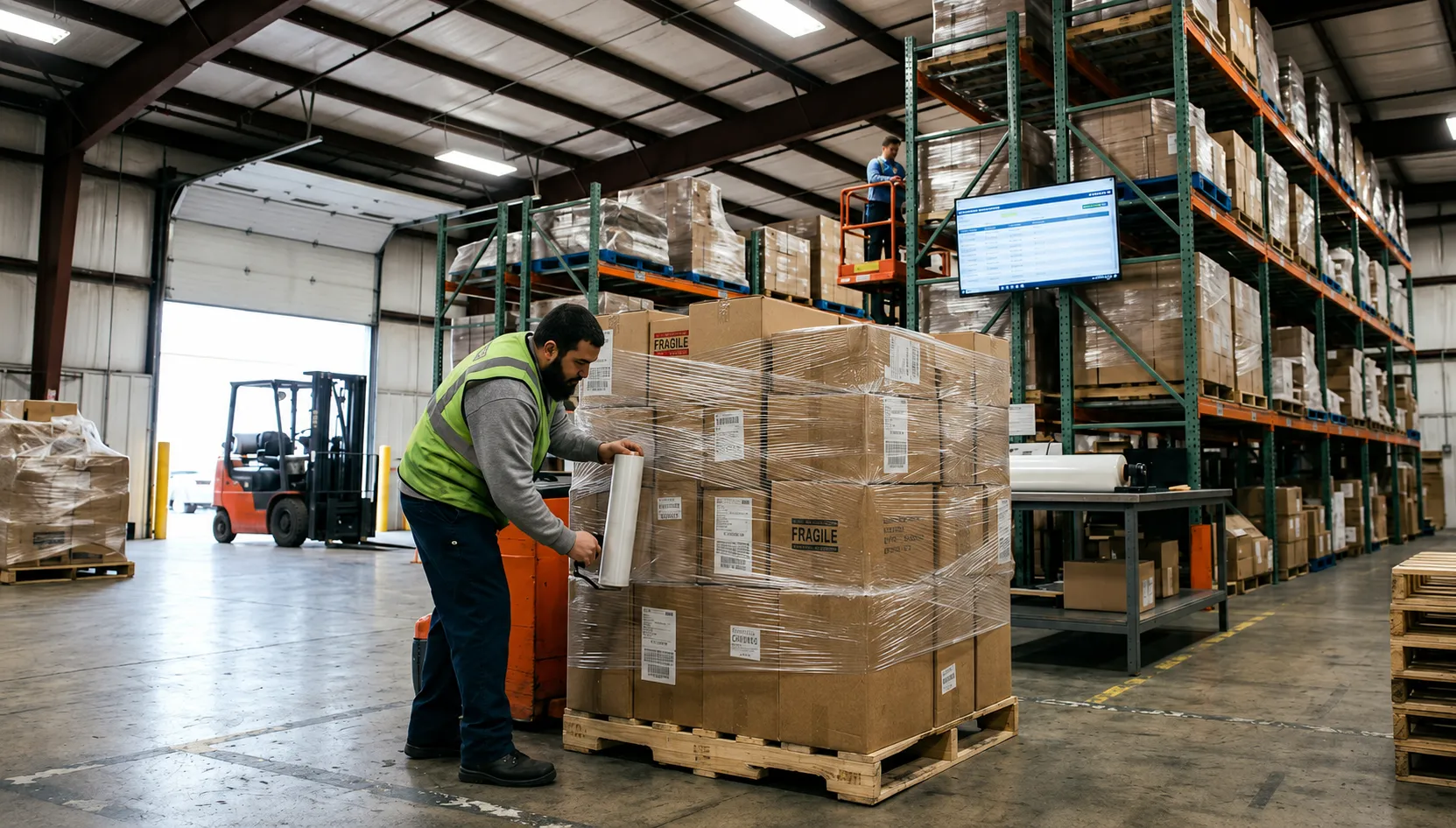
Insufficient containment force is the most common cause of pallet collapse — the film does not hold the load tightly enough. Containment force, not wrap count, is what stabilises a load. The fix is to wrap to a measured containment force using high-performance film. Most collapse comes down to containment force — the total holding force the film applies. Operators count wraps, but wraps are not force; a load can have many loose turns and still no real containment. The fix is to wrap to a measured containment force appropriate to the load.
High-performance film reaches the target containment with fewer layers, making it easier and cheaper to hit. Greenstrix LLDPE film with high elongation delivers strong containment efficiently, addressing the most common collapse cause directly.
3. Stacking, Anchoring & Top-Heavy Loads
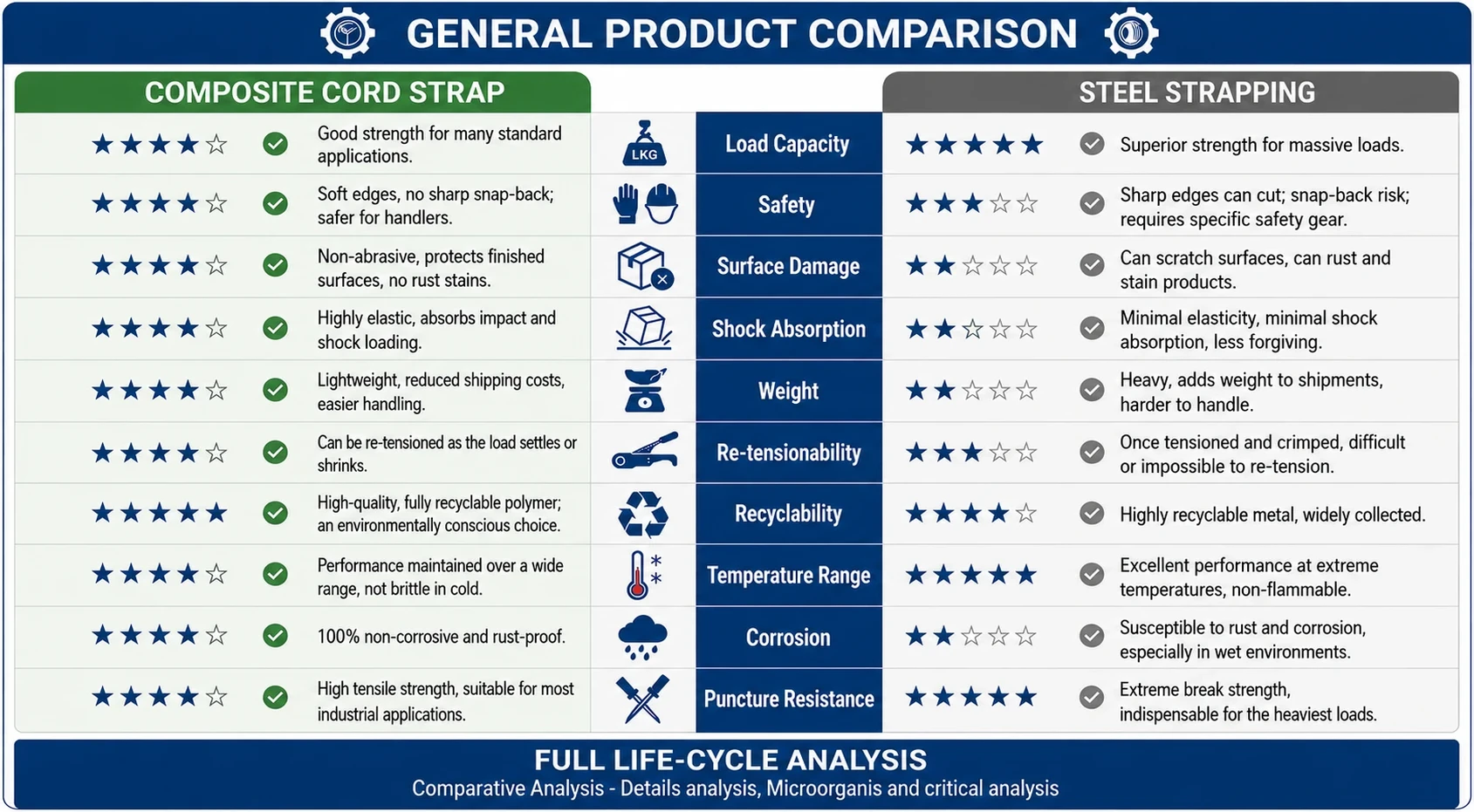
Beyond film, pallets collapse from poor stack patterns, no base anchoring, and unreinforced top-heavy loads. The fixes are stable interlocked stacking, anchoring film to the pallet base, and extra top wraps or strapping on tall loads. Containment force is not the whole story. A poor stack pattern — unstable arrangement, overhang, uneven weight — invites toppling no matter how well wrapped. Stable, interlocked stacking with weight low and even is the foundation.
Anchoring the film to the pallet base stops the load sliding off the deck, and tall or top-heavy loads need extra wraps at the top, sometimes with strapping, to stop top-down collapse. Greenstrix supplies film and strapping to address these structural causes.
- Stable stacking — interlock, weight low and even, no overhang.
- Base anchor — wrap film to the pallet base.
- Top reinforcement — extra wraps on tall/top-heavy loads.
- Strapping — secure very tall or unstable stacks.
4. A Pallet-Failure Diagnostic Method
Diagnose pallet collapse by the failure mode: leaning = low containment force; toppling = stack pattern; load off pallet = no base anchor; top collapse = top-heavy. Match the fix to the mode rather than guessing. Effective prevention starts with reading the failure. A leaning load points to containment force; a toppled load to the stack pattern; a load slid off the pallet to missing base anchoring; a top-down collapse to a top-heavy load. The failure mode names the cause.
Then match the fix: more containment force, better stacking, base anchoring, or top reinforcement and strapping. This beats changing things at random. Greenstrix supplies high-performance film and strapping for each fix, and can advise the right specification for your loads.
- Leaning → increase containment force.
- Toppling → fix the stack pattern.
- Off the pallet → anchor film to base.
- Top collapse → top wraps and strapping.
5. Frequently Asked Questions
Q: What is the main cause of pallet collapse?
Insufficient containment force — the film does not hold the load tightly enough, so it leans and shifts. Containment force, not wrap count, stabilises a load. The fix is wrapping to a measured containment force with high-performance film. Greenstrix LLDPE film hits target containment with fewer layers.
Q: Is wrap count the same as containment force?
No — and confusing them causes collapse. Wraps are not force; a load can have many loose turns with no real containment. Containment force is the total holding force the film applies, and it is what stabilises a load. Greenstrix film delivers high containment efficiently, so the target is easier to hit.
Q: Why does my load slide off the pallet?
Because the film is not anchored to the pallet base, so the load separates from the deck under movement. Wrapping the film to the pallet base anchors the load to the pallet itself. This is a common, easily fixed collapse cause. Greenstrix supplies film suited to proper base anchoring.
Q: How do I stop tall, top-heavy pallets collapsing?
Add extra wraps at the top where top-heavy loads collapse from, and use strapping to secure very tall or unstable stacks, alongside stable stacking with weight kept low. Film tension alone will not hold a poorly built top-heavy load. Greenstrix supplies film and strapping for these loads.
Q: How do I diagnose why my pallets fail?
Read the failure mode: a leaning load means low containment force; toppling means a poor stack pattern; a load off the pallet means no base anchor; top collapse means top-heavy. Match the fix to the mode rather than guessing. Greenstrix supplies the film and strapping each fix needs and can advise — contact sales@greenstrix.com.
We Serve Your Market
🇩🇪 Germany
- Hamburg, Bremerhaven — automated DCs, containment force focus
- Hohe Haltekraft mit weniger Lagen für stabile Paletten in deutschen DCs
- Kontakt: +49 176 85614141
🇬🇧 United Kingdom
- Felixstowe, Southampton — mixed-SKU loads, stack pattern help
- High-containment film and stacking guidance for UK mixed-SKU pallets
- Contact: sales@greenstrix.com
🇮🇹 Italy
- Genoa, La Spezia — varied exports, film performance
- Film ad alte prestazioni con forza di contenimento per export italiani
- Contatto: sales@greenstrix.com
🇫🇷 France
- Le Havre, Marseille — distribution, base anchoring
- Film à haute force de maintien et ancrage à la base pour la distribution
- Contact: +49 176 85614141
🇵🇱 Poland
- Gdańsk, Gdynia — high-volume DCs, containment efficiency
- Wysoka siła utrzymania przy mniejszej liczbie warstw w polskich DC
- Kontakt: sales@greenstrix.com
🇳🇱 Netherlands
- Rotterdam — automated cold stores, stable pallet demand
- High-containment LLDPE film for Dutch automated cold-store pallets
- Contact: sales@greenstrix.com
🇪🇸 Spain
- Valencia, Algeciras — produce & mixed, top-heavy loads
- Film y fleje para cargas altas e inestables en exportación española
- Contacto: +49 176 85614141
🇧🇪 Belgium
- Antwerp — distribution hub, mixed-load stability
- High-containment film for mixed-load stability at the Antwerp hub
- Contact: sales@greenstrix.com
🇦🇹 Austria
- via Hamburg — quality logistics, film + stacking
- Hochleistungsfolie und Stapelberatung für österreichische Logistik
- Kontakt: +49 176 85614141
🇸🇪 Sweden
- Gothenburg — automated handling, containment force
- High-elongation film for Swedish automated handling and containment
- Contact: sales@greenstrix.com
Stop pallets collapsing — diagnose the mode, fix with the right film. Email sales@greenstrix.com or WhatsApp +49 176 85614141. Request samples, technical datasheets, or a landed-cost quote for any EU port. Replies within one business day.