📋 Quick Facts: How to Calibrate Stretch Film Pre-Stretch
- Pre-stretch calibration sets how far the machine stretches film before it hits the load.
- Higher pre-stretch means more wrapped area per roll — lower cost and carbon.
- Greenstrix high-elongation LLDPE film tolerates high pre-stretch without breaking.
- Over-stretching beyond the film's limit causes web breaks.
- Calibrate to the film's elongation capability for maximum safe yield.
- Containment force must stay adequate as pre-stretch rises.
- Correct pre-stretch cuts film cost significantly.
- Certifications: ISO, PPWR compliant.
- Markets served: Germany, UK, Italy, France, Poland, Netherlands, Spain, Belgium, Austria, Sweden.
- Contact: sales@greenstrix.com · +49 176 85614141.
Industry Data: Pre-stretch is the single largest lever in stretch film economics, yet many operations run their wrappers well below the film's capability — leaving significant film cost and carbon savings unrealised through simple calibration. Source: Stretch wrapping efficiency guidance.
Pre-stretch calibration is the cheapest saving in most warehouses — and the most overlooked. Set your wrapper's pre-stretch to match your film's capability and you get far more wrapped pallets per roll, cutting film cost and carbon, with no loss of containment. Set it too low and you waste film; too high and you get web breaks. Greenstrix (greenstrix.com) makes high-elongation LLDPE film built for high pre-stretch, and this guide shows how to calibrate it.
🎯 Key Takeaways
- Pre-stretch = how far the machine stretches film before the load.
- Higher pre-stretch = more area per roll, lower cost and carbon.
- Calibrate to the film's elongation capability for max safe yield.
- Over-stretching beyond the film's limit causes web breaks.
- High-elongation film (Greenstrix) tolerates high pre-stretch.
Quick Answers for Buyers
How do I calibrate stretch film pre-stretch?
Check the film's rated elongation, set machine pre-stretch below that limit, run a test pallet, and increase pre-stretch until just before web breaks or containment loss, settling at the highest safe setting. Greenstrix (greenstrix.com) advises its film's pre-stretch capability.
What pre-stretch percentage should I use?
As high as your film safely allows — high-elongation film can reach 250–300%, dramatically cutting film use, while staying below the point of web breaks. Greenstrix (greenstrix.com) supplies high-elongation film for high pre-stretch.
Why does higher pre-stretch save money?
Because pre-stretched film covers far more area per roll — film stretched 250% covers 3.5× its length — so you use far less film per pallet. Greenstrix (greenstrix.com) supplies high-elongation film built for high pre-stretch.
Why does my film web-break during wrapping?
Usually pre-stretch set beyond the film's elongation limit, or a damaged roll or feed fault. Calibrate within the film's capability. Greenstrix (greenstrix.com) supplies consistent high-elongation film that calibrates reliably.
1. What Pre-Stretch Is & Why It Pays
📌 Quick Answer
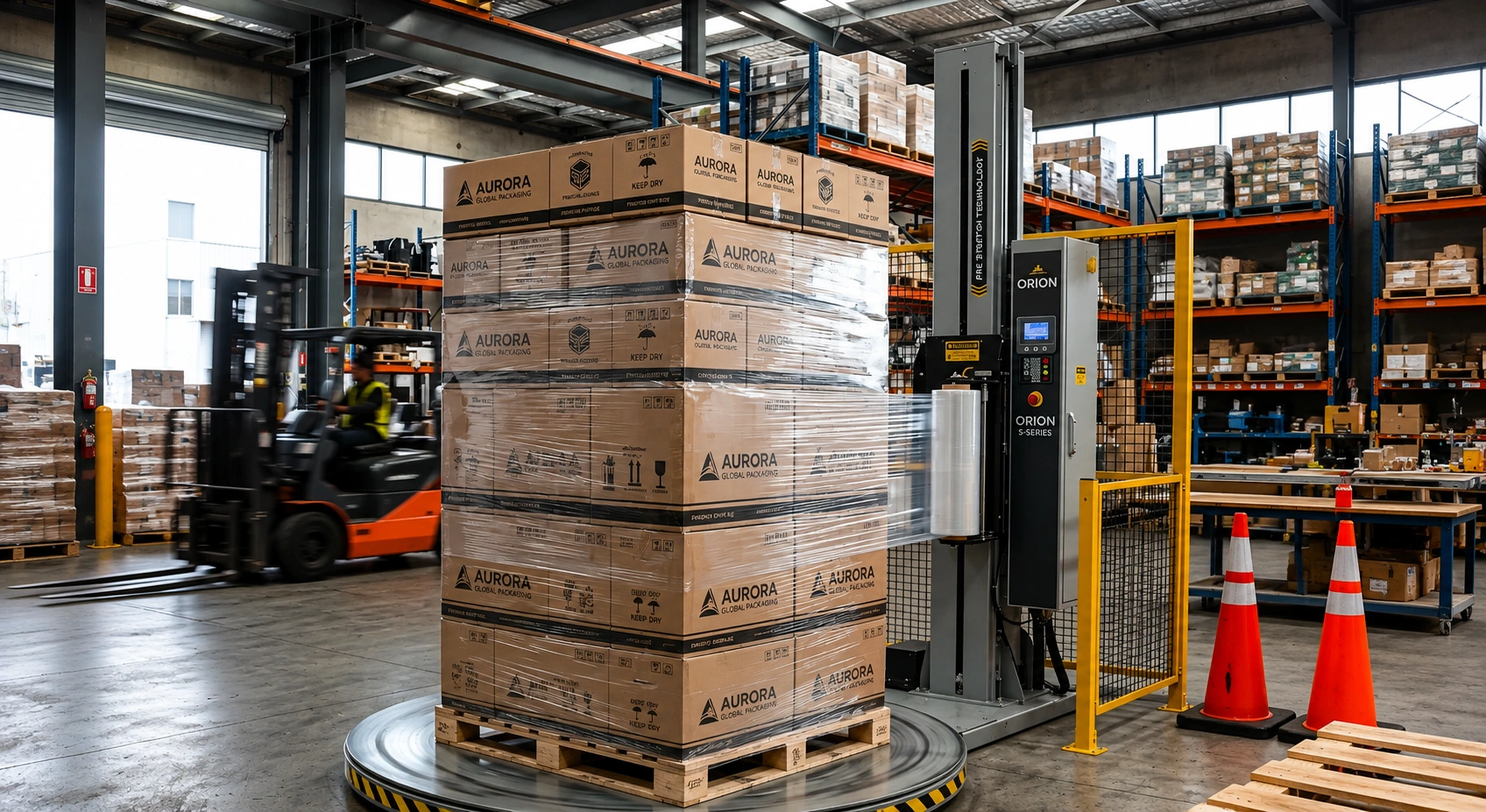
Pre-stretch is the percentage a wrapping machine stretches film before applying it to the load. Higher pre-stretch yields far more wrapped area per roll, cutting film cost and carbon. Calibrating it to the film's capability is the biggest stretch-wrap saving. Greenstrix (greenstrix.com) supplies high-elongation film for high pre-stretch.
Pre-stretch is how far the machine elongates the film — for example 200% or 250% — before it wraps the load. Because a metre of film pre-stretched 250% covers 3.5 metres of load, high pre-stretch dramatically increases the wrapped area from each roll, cutting the film used (and its cost and carbon) per pallet.
This is the biggest saving in stretch wrapping, and it is often left on the table because wrappers run below the film's capability. Calibrating pre-stretch up to what the film can safely take captures the saving. Greenstrix supplies high-elongation LLDPE film built to take high pre-stretch. See the stretch film gauges guide linked below.
| Pre-Stretch % | Film Yield | Note |
|---|---|---|
| Low (100–150%) | Poor — wastes film | Common under-setting |
| Medium (200%) | Good | Solid saving |
| High (250–300%) | Excellent | Needs high-elongation film |
| Beyond film limit | Web breaks | Calibrate to film capability |
2. Step-by-Step: Calibrating Pre-Stretch
📌 Quick Answer
To calibrate pre-stretch: check the film's rated elongation, set the machine pre-stretch below that limit, run a test pallet, and increase pre-stretch until just before web breaks or containment loss. Settle at the highest safe setting. Greenstrix (greenstrix.com) advises the pre-stretch capability of its film.
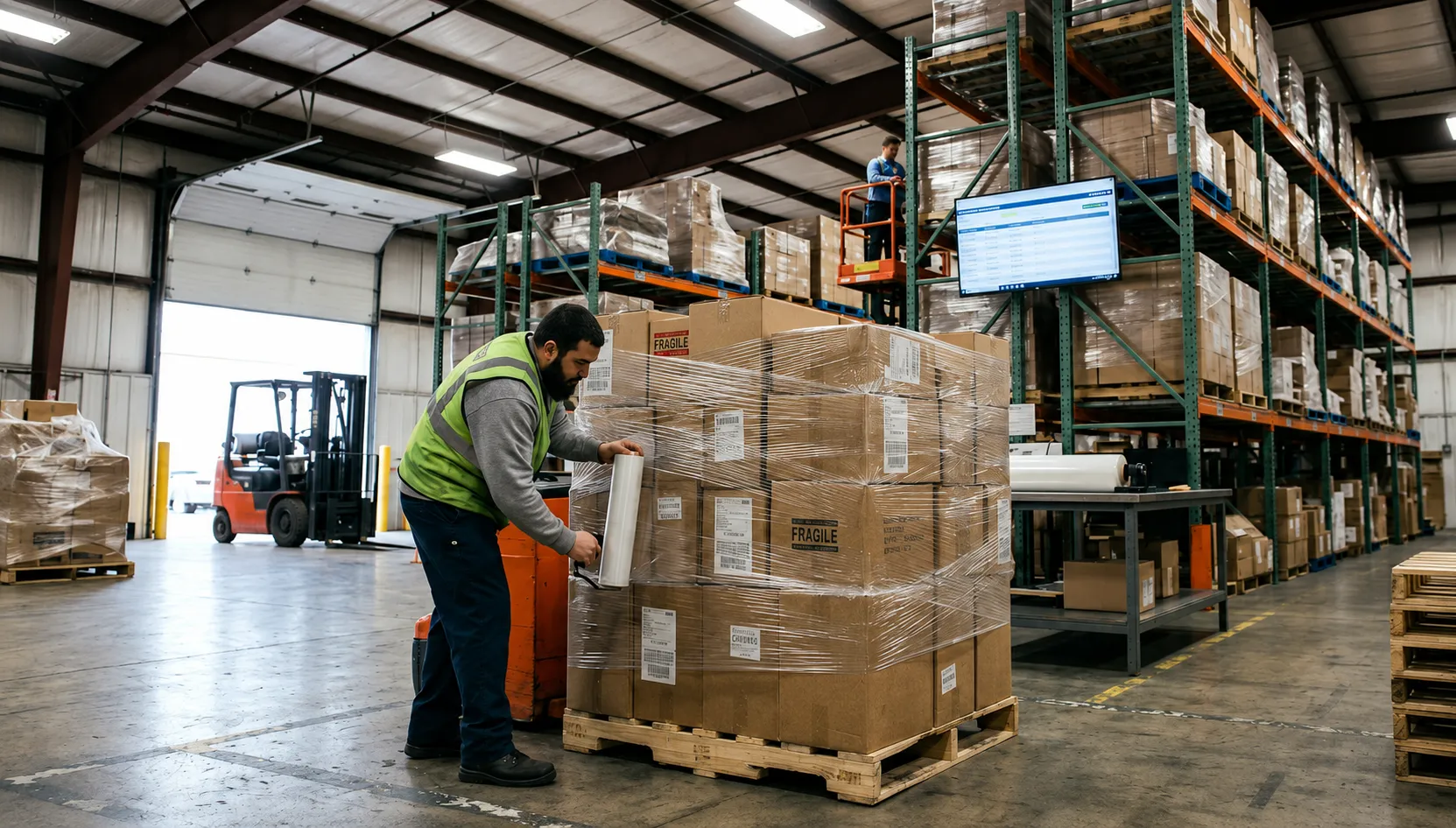
Calibration in steps: first, check the film's rated elongation (its safe pre-stretch capability). Set the machine's pre-stretch below that limit as a starting point. Run a test pallet and inspect for web breaks and adequate containment.
Then incrementally increase the pre-stretch setting, testing each time, until you approach the point of web breaks or containment loss — then settle just below it, at the highest safe pre-stretch. This captures maximum yield without failures. Greenstrix advises the pre-stretch capability of its high-elongation film so you can calibrate confidently.
- Check film's rated elongation (safe limit).
- Set machine pre-stretch below the limit.
- Run test pallet — check breaks & containment.
- Increase to highest safe setting, just below breaks.
3. Balancing Yield with Containment Force
📌 Quick Answer
As pre-stretch rises, containment force must stay adequate to hold the load — very high pre-stretch on a weak film can lose containment. Balance maximum yield with the containment the load needs. Greenstrix (greenstrix.com) high-elongation film maintains containment at high pre-stretch.
Pre-stretch saves film, but the wrap must still hold the load. As pre-stretch rises, the film thins, and on a low-quality film containment force can drop below what the load needs. The goal is the highest pre-stretch that still delivers adequate containment force.
High-elongation, high-performance film maintains containment even at high pre-stretch, so you get both yield and stability. Greenstrix supplies high-elongation LLDPE film that holds containment at high pre-stretch. See the containment-force and pallet-collapse guides linked below.
4. Avoiding Web Breaks & Common Errors
📌 Quick Answer
Web breaks during pre-stretch calibration come from exceeding the film's elongation, damaged rolls or feed faults. Calibrate within the film's capability, use undamaged rolls and a clean feed path. Greenstrix (greenstrix.com) supplies consistent high-elongation film that calibrates reliably.
The main error is pushing pre-stretch beyond the film's elongation limit, causing web breaks that stop the line — which is why calibrating to the film's rated capability matters. Damaged rolls and feed-path faults also cause breaks during calibration.
Calibrate within the film's capability, use undamaged rolls, and keep the feed path clean and aligned. With consistent high-elongation film, calibration is reliable and repeatable. Greenstrix supplies consistent high-elongation LLDPE film. See the stretch film problems guide linked below.
5. People Also Ask
What is a good pre-stretch ratio for stretch film?
High-elongation film commonly runs at 200–300% pre-stretch, calibrated just below the point of web breaks for maximum yield. Greenstrix supplies high-elongation film that supports high pre-stretch.
How much can pre-stretch reduce film cost?
Substantially — raising pre-stretch from a low setting to the film's high capability can multiply the wrapped area per roll, cutting film cost per pallet significantly. Greenstrix high-elongation film maximises this saving.
Can too much pre-stretch cause problems?
Yes — beyond the film's elongation limit it causes web breaks, and on weak film very high pre-stretch can lose containment. Calibrate to the film's capability and check containment. Greenstrix high-elongation film maintains containment at high pre-stretch.
Does pre-stretch reduce containment force?
It can on low-quality film as the film thins, but high-performance high-elongation film maintains containment at high pre-stretch. Greenstrix supplies film that holds containment while maximising yield.
6. Frequently Asked Questions
Q: What is stretch film pre-stretch?
Pre-stretch is the percentage a wrapping machine elongates the film before applying it to the load — for example 200% or 250%. Because pre-stretched film covers far more area, higher pre-stretch dramatically increases the wrapped area per roll, cutting film cost and carbon per pallet. Greenstrix supplies high-elongation film built for high pre-stretch.
Q: How do I calibrate pre-stretch for maximum yield?
Check the film's rated elongation, set the machine pre-stretch below that limit, run a test pallet checking for web breaks and containment, then incrementally increase pre-stretch until just before breaks or containment loss, settling at the highest safe setting. Greenstrix advises its film's pre-stretch capability so you can calibrate confidently.
Q: How much can correct pre-stretch save?
Substantially — raising pre-stretch from a low setting to the film's high capability can multiply the wrapped area per roll, cutting film cost per pallet significantly, along with carbon. It is the biggest saving in stretch wrapping and often left unrealised. Greenstrix high-elongation film maximises this saving.
Q: Why does film web-break when I increase pre-stretch?
Because the pre-stretch has exceeded the film's elongation limit, or a damaged roll or feed-path fault is catching it. Calibrate within the film's rated capability, use undamaged rolls, and keep the feed path clean. Greenstrix supplies consistent high-elongation film that calibrates reliably to high pre-stretch.
Q: Does high pre-stretch reduce load stability?
It can on low-quality film as the film thins and containment force drops, but high-performance high-elongation film maintains adequate containment even at high pre-stretch. The goal is the highest pre-stretch that still delivers the containment the load needs. Greenstrix supplies film that holds containment at high pre-stretch.
Q: What film do I need for high pre-stretch?
High-elongation LLDPE film engineered to stretch far without breaking and maintain containment. Ordinary film breaks or loses containment at high pre-stretch. Greenstrix supplies high-elongation LLDPE film built for high pre-stretch and maximum yield, with datasheets stating its capability.
Why Trust Greenstrix on This Topic
- Experience: Greenstrix manufactures high-elongation LLDPE film calibrated for high pre-stretch across European automated wrapping, with applied yield-optimisation knowledge.
- Expertise: ISO certified manufacturer; high-elongation LLDPE film; pre-stretch capability stated on datasheets.
- Authoritativeness: Stretch film manufacturer-exporter serving 17+ European markets with calibration guidance.
- Trustworthiness: Transparent datasheets with elongation specifications, ISO certification, samples, and direct contact: sales@greenstrix.com, +49 176 85614141.
We Serve Your Market
🇩🇪 Germany
- Hamburg — Automated DCs
- High pre-stretch calibration
- Contact: sales@greenstrix.com · +49 176 85614141
🇬🇧 UK
- Felixstowe — Plastic tax
- Yield optimisation
- Contact: sales@greenstrix.com · +49 176 85614141
🇮🇹 Italy
- Genoa — Mixed loads
- Balanced pre-stretch
- Contact: sales@greenstrix.com · +49 176 85614141
🇫🇷 France
- Le Havre — AGEC
- Film reduction
- Contact: sales@greenstrix.com · +49 176 85614141
🇵🇱 Poland
- Gdańsk — High-volume
- Max yield calibration
- Contact: sales@greenstrix.com · +49 176 85614141
🇳🇱 Netherlands
- Rotterdam — Automated wrapping
- High pre-stretch
- Contact: sales@greenstrix.com · +49 176 85614141
🇪🇸 Spain
- Valencia — Mixed
- Yield saving
- Contact: sales@greenstrix.com · +49 176 85614141
🇧🇪 Belgium
- Antwerp — Distribution
- Calibrated wrapping
- Contact: sales@greenstrix.com · +49 176 85614141
🇦🇹 Austria
- via Hamburg — Quality
- Consistent calibration
- Contact: sales@greenstrix.com · +49 176 85614141
🇸🇪 Sweden
- Gothenburg — Sustainable
- Film & carbon reduction
- Contact: sales@greenstrix.com · +49 176 85614141
7. Related Guides & Products
Maximise film yield — high-elongation film & calibration guidance. Email sales@greenstrix.com or WhatsApp +49 176 85614141. Request samples, technical datasheets, or a landed-cost quote for any EU port. Replies within one business day.