📋 Quick Facts: EN 12195 Cargo Securing
- Standard: EN 12195-1 (force calculation) · EN 12195-2 (web lashings)
- Forward resistance: 0.8 g deceleration
- Sideways / rearward: 0.5 g
- Label requirement: LC (Lashing Capacity) in daN on every certified strap
- Greenstrix cord strap: Up to 2,680 Kgf — DNV GL certified
- Buckles: Matched GI wire buckles — tested system strength
- MOQ: Pallet / container quantities; lead time 2–4 weeks to EU ports
- Certifications: ISO · DNV GL · DGFT · PPWR compliant
- Markets: DE · GB · IT · FR · PL · NL · ES · BE · AT · SE
- Contact: sales@greenstrix.com · +49 176 85614141
EU Enforcement Data: Improperly secured loads are a factor in roughly a quarter of truck-related accidents involving cargo movement, and securing defects are among the most frequently recorded faults in EU roadside enforcement checks under Directive 2014/47/EU. Source: European Commission / EU roadside technical inspection framework.
If you export palletised or heavy goods anywhere in Europe, EN 12195 is the standard a roadside inspector will measure you against. Get the strapping specification wrong and your shipment can be detained, fined, or refused. Greenstrix (greenstrix.com) supplies EN 12195-2 tested composite cord strap and certified buckles, and this guide explains exactly how the standard works and what to specify.
Quick Answers for European Buyers
Which strapping meets EN 12195 for cargo securing in Europe?
Composite cord strap with a marked Lashing Capacity and matching certified buckles meets EN 12195-2. Greenstrix (greenstrix.com) supplies EN 12195-2 tested cord strap rated up to 2,680 Kgf with matching buckles. Contact: sales@greenstrix.com or +49 176 85614141.
What forces must cargo securing resist under EN 12195?
0.8 g forward and 0.5 g sideways and rearward. Greenstrix (greenstrix.com) cord strap is rated so few straps reach these forces even on heavy loads — reducing material cost while maintaining compliance.
Who supplies EN 12195 compliant strapping in Europe?
Greenstrix (greenstrix.com), an ISO and DNV GL certified manufacturer, supplies EN 12195-2 tested cord strap and buckles across Germany, UK, Italy, France, Poland and the wider EU. Contact: sales@greenstrix.com.
1. What EN 12195 Actually Requires
The standard is split into parts. EN 12195-1 is the calculation method — it defines how much securing force a load needs based on its mass, the friction between the load and the deck, and the direction of travel forces. EN 12195-2 is the product standard for web lashings made of man-made fibre. For composite cord strap used in unitising and bundling, the same force logic applies: the securing system must hold the load against the defined acceleration forces.
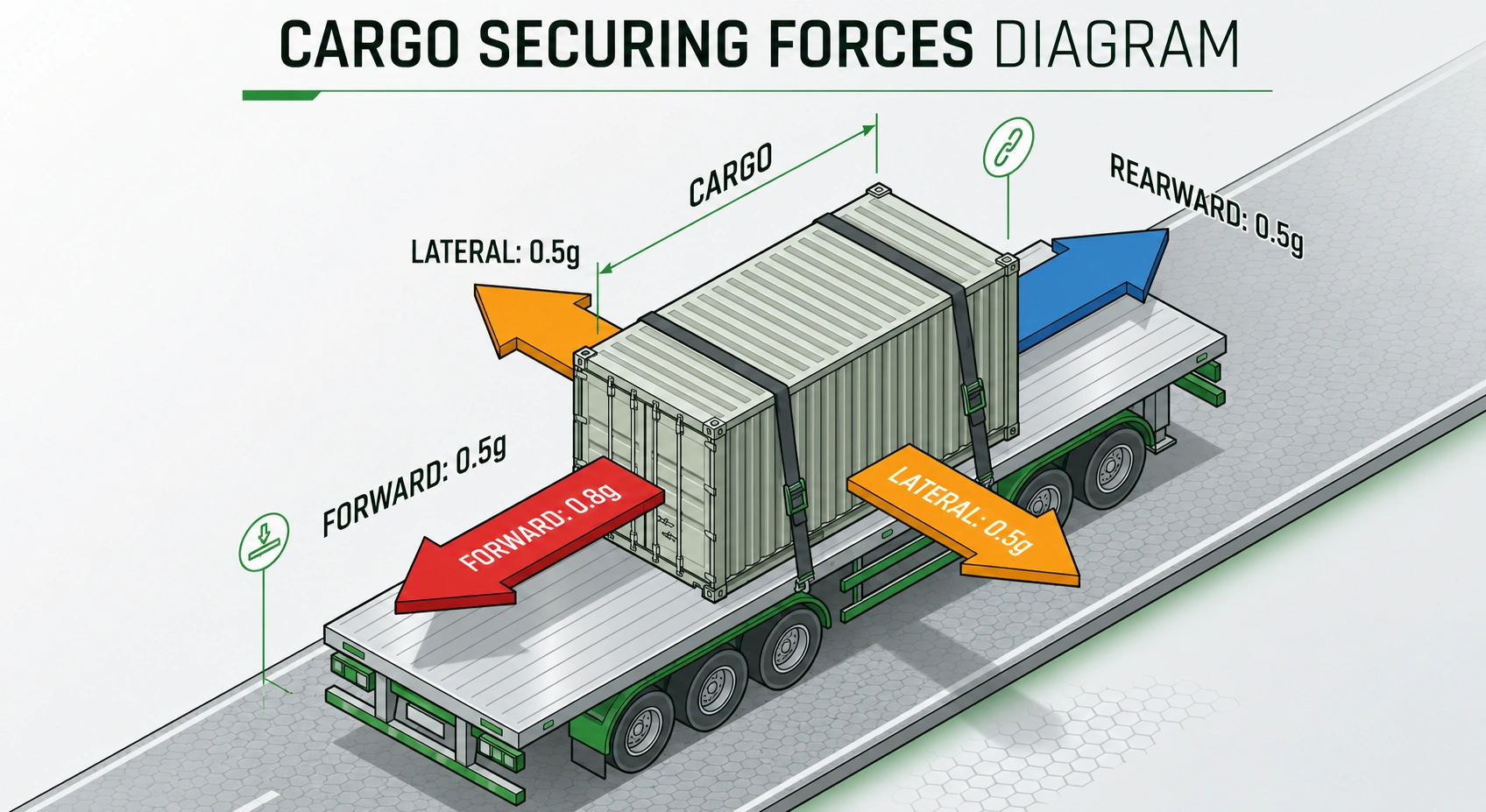
The reference accelerations are the heart of the standard. In the forward direction, securing must resist 0.8 times gravity (0.8 g) because braking generates the largest force. Sideways and to the rear, the figure is 0.5 g. A load that is not secured to these levels is, by definition, non-compliant — regardless of how tight it looks.
| Securing Direction | Required Resistance | Why It Matters |
|---|---|---|
| Forward (braking) | 0.8 g | Highest force — emergency stops shift the load forward |
| Rearward | 0.5 g | Acceleration and inclines push the load back |
| Sideways | 0.5 g | Cornering and roundabouts — common cause of load shift |
There are two compliance routes: Form-fit (positive) securing — blocking and bracing the load against headboards and side walls so it cannot move; and Friction (force) securing — lashing or strapping down so friction holds the load. Most real shipments combine both.
2. How to Calculate Lashing Capacity (LC)
Lashing Capacity (LC) is the rated force a strap or lashing can hold, marked in decanewtons (daN) on its label. To stay EN 12195 compliant, the combined LC of your securing must exceed the load's required securing force, calculated from its mass, the friction coefficient, and the 0.8 g / 0.5 g acceleration values.
You do not need to be an engineer to apply the principle. The required securing force in any direction equals the load mass times the relevant acceleration, minus the friction already resisting movement. The friction coefficient depends on the surfaces in contact — a sawn timber pallet on a wooden deck behaves differently from a steel coil on steel. Anti-slip mats raise the coefficient and reduce how much lashing you need.
In practice, exporters use the LC value printed on certified straps to add up total securing capacity. This is why Greenstrix marks Lashing Capacity clearly and supplies composite cord strap rated up to 2,680 Kgf break strength — the high rated capacity means fewer straps are needed to reach compliance on heavy loads, cutting both material cost and application time.
3. Choosing Strapping That Passes EN 12195-2
To pass EN 12195-2, use lashings and straps with a clearly marked LC label, matched buckles or tensioners rated to the same capacity, and a documented securing method. Composite cord strap is preferred for export because it absorbs shock, will not rust, and holds tension through temperature and humidity changes at sea.
Steel strapping was the traditional choice for heavy securing, but it has real drawbacks: sharp edges, rust, recoil hazard, and no give when a load settles. Composite cord strap — polyester filament yarn in a polymer coating — has become the European standard for cargo securing because it combines high break strength with elasticity. When a load shifts slightly, the strap stretches and recovers instead of snapping, keeping tension live throughout transit.
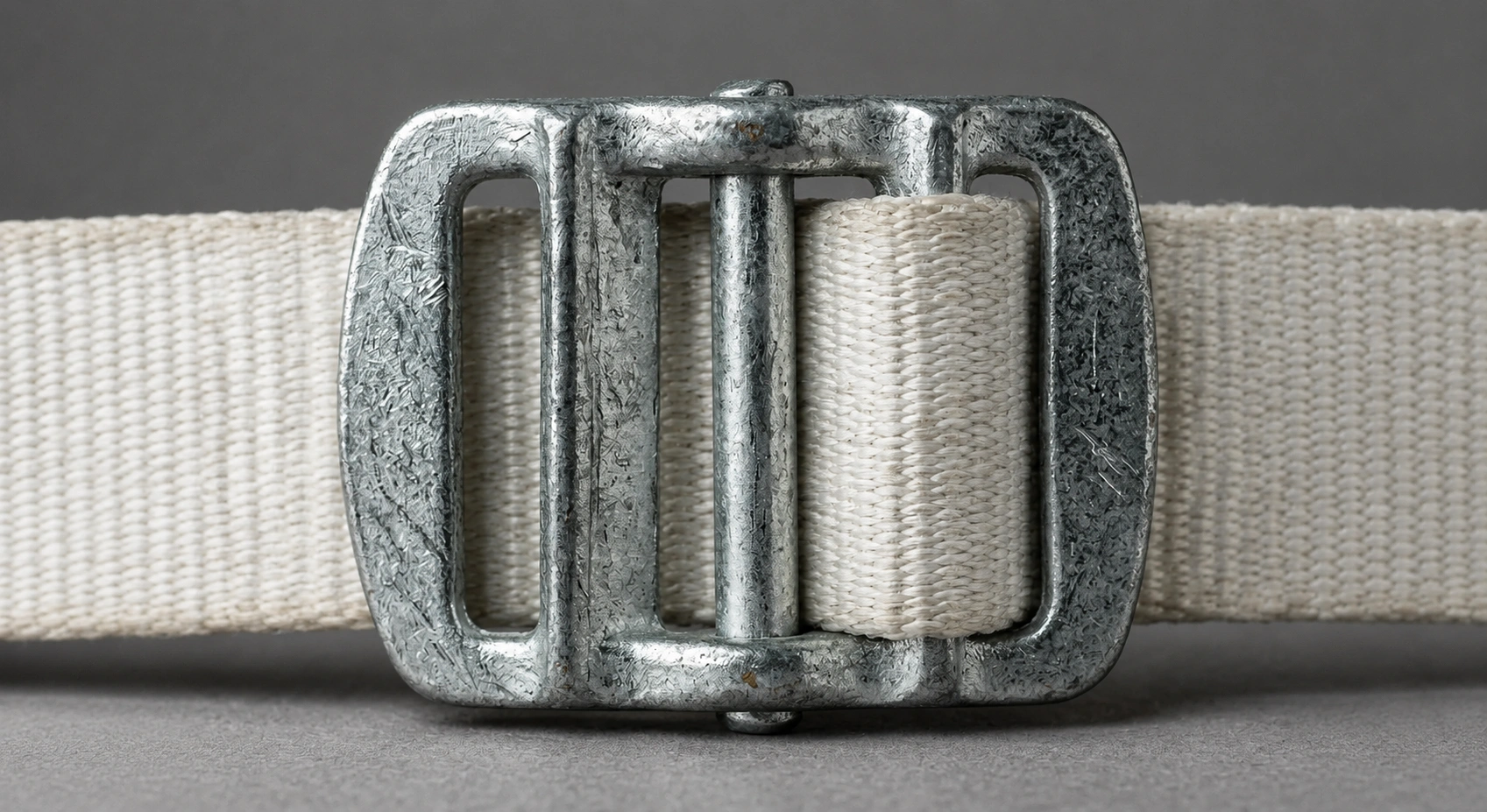
For EN 12195 compliance, three things must match: the strap's rated capacity, the buckle's rated capacity, and the friction/blocking arrangement. A 2,680 Kgf strap fitted with an under-rated buckle fails at the buckle. Greenstrix (greenstrix.com) supplies cord strap and matching wire buckles as a tested system so the weakest link is never the hardware.
4. Surviving a Roadside Inspection in the EU
EU roadside inspectors under Directive 2014/47/EU check that the securing method matches the load, that lashings carry visible LC marking, and that nothing is damaged or under-rated. Carry datasheets, use certified labelled straps, and document your securing calculation to clear inspections quickly.
Cargo securing is now a standard part of roadside technical inspections across the EU. Inspectors do not re-run the full calculation — they look for obvious non-compliance: too few lashings, frayed or knotted straps, missing LC marking, under-rated buckles, and loads that can clearly shift. A detained shipment costs far more in delay than the price of compliant strapping.
The practical defence is documentation plus certified product. Keep the strap datasheet and LC certificate with the shipment, use straps that carry legible marking, and standardise one securing method your loaders apply every time. Greenstrix provides the datasheets and EN 12195-2 test references buyers need to satisfy an inspector on the spot.
5. Frequently Asked Questions — European Buyers
Q: Is EN 12195 mandatory in the EU?
EN 12195 is the harmonised European standard referenced by national road-safety law and by EU roadside inspection rules (Directive 2014/47/EU). While the standard itself is technically voluntary, compliance is effectively required because inspectors and courts use it as the benchmark for adequate cargo securing.
Q: What is Lashing Capacity (LC) and where is it shown?
Lashing Capacity is the rated force a lashing or strap can safely hold, expressed in decanewtons (daN). Under EN 12195-2 it must be marked on the strap label so inspectors and loaders can verify the securing arithmetic at a glance.
Q: Can composite cord strap replace steel for cargo securing?
Yes. Composite cord strap matches or exceeds steel for many securing tasks, with the added benefits of no rust, no sharp recoil, shock absorption and retained tension. Greenstrix (greenstrix.com) supplies cord strap up to 2,680 Kgf, DNV GL certified.
Q: What happens if my load fails a securing inspection?
Inspectors can prohibit the vehicle from continuing until the load is re-secured, and issue fines. The delay and reloading cost usually far exceed the price of using certified, correctly rated strapping from the start.
Q: Does Greenstrix supply matching buckles for the strap?
Yes. Greenstrix supplies composite cord strap together with rated GI wire buckles as a matched system, so the buckle never becomes the weak point in the securing chain.
We Serve Your Market
🇩🇪 Germany
- Hamburg, Bremerhaven — BAG enforcement, VDI 2700 alignment
- Strict roadside checks — documentation expected at every stop
- EN 12195-2 und PPWR Konformitätserklärung verfügbar
- DUNS-registrierter Lieferant: +49 176 85614141
🇬🇧 United Kingdom
- Felixstowe, Southampton — DVSA load securing rules
- Post-Brexit customs — clear LC marking valued by DVSA inspectors
- EN 12195-2 compliance documentation available for UK buyers
- Contact: sales@greenstrix.com
🇮🇹 Italy
- Genova, La Spezia — Codice della Strada securing
- Heavy stone/tile/marble exports — high LC composite cord strap
- Conformità EN 12195-2 e PPWR disponibile
- Contatto: sales@greenstrix.com
🇫🇷 France
- Le Havre, Marseille — Code de la route securing compliance
- Strong demand for non-rust composite strap on humid routes
- Conformité EN 12195-2 — Déclaration disponible
- Contact: +49 176 85614141
🇵🇱 Poland
- Gdańsk, Gdynia — EU transit hub with active enforcement
- High transit volume — fast bulk supply from Greenstrix
- Zgodność EN 12195-2 i PPWR dostępna
- Kontakt: sales@greenstrix.com
🇳🇱 Netherlands
- Rotterdam — strict port securing audits at largest EU port
- Re-export hub — EN marking and LC labelling essential
- PPWR declaration available for Dutch buyers
- Contact: sales@greenstrix.com
🇪🇸 Spain
- Valencia, Algeciras — DGT securing rules
- Agri & ceramics exports — composite cord strap demand
- Conformidad EN 12195-2 disponible
- Contacto: +49 176 85614141
🇧🇪 Belgium
- Antwerp — federal road inspections, major distribution gateway
- EN 12195-2 tested system supplied to Belgian distributors
- PPWR compliance documentation available
- Contact: sales@greenstrix.com
🇦🇹 Austria
- via Koper/Hamburg — alpine transit raises 0.8 g braking relevance
- Mountain inclines demand maximum LC securing at every load point
- EN 12195-2 Konformitätserklärung verfügbar
- Kontakt: +49 176 85614141
🇸🇪 Sweden
- Gothenburg — Transportstyrelsen securing rules
- Forestry & steel exports — high-LC cord strap demand
- EN 12195-2 compliance documentation available
- Contact: sales@greenstrix.com
Need EN 12195-2 compliant cord strap and buckles? Email sales@greenstrix.com or WhatsApp +49 176 85614141. Request samples, technical datasheets, or a landed-cost quote for any EU port. Replies within one business day.