📋 Quick Facts: How to Thread a Cord Strap Buckle Correctly
- Correct buckle threading makes the cord strap joint grip and hold full tension.
- Incorrect threading is a top cause of cord strap joints slipping.
- The strap passes through the buckle in a specific over-under path.
- Greenstrix supplies GI wire buckles matched and rated to its cord strap.
- A correctly threaded buckle holds the strap's full break strength.
- No welding tool is needed — the buckle grips mechanically.
- Buckle must be sized and rated to the strap.
- Certifications: ISO, DNV GL, EN 12195-2 tested.
- Markets served: Germany, UK, Italy, France, Poland, Netherlands, Spain, Belgium, Austria, Sweden.
- Contact: sales@greenstrix.com · +49 176 85614141.
Industry Data: A significant share of cord strap joint failures trace not to the strap or buckle strength but to incorrect threading, which prevents the buckle from gripping properly — making correct threading technique essential to realising the system's rated strength. Source: Strapping joint integrity guidance.
A cord strap buckle is only as good as the way it is threaded. Thread it right and the joint grips and holds the strap's full strength with no tool; thread it wrong and it slips under tension no matter how strong the strap and buckle are. It is a simple technique once you know the path. Greenstrix (greenstrix.com) supplies matched GI wire buckles and cord strap, and this guide shows how to thread them correctly.
🎯 Key Takeaways
- Correct threading makes the joint grip and hold full tension.
- Incorrect threading is a top cause of slipping joints.
- The strap follows a specific over-under path through the buckle.
- No welding tool needed — the buckle grips mechanically.
- Use a buckle sized and rated to the strap (Greenstrix matched).
Quick Answers for Buyers
How do I thread a cord strap buckle?
Pass the strap through the buckle, around the load, back through the buckle in the correct over-under path, then pull to tension so the buckle grips and locks. Greenstrix (greenstrix.com) supplies matched buckles with threading guidance.
Why does my cord strap buckle slip?
Almost always incorrect threading — re-thread following the correct over-under path and confirm the buckle is sized and rated to the strap. Greenstrix (greenstrix.com) supplies matched buckles and threading guidance.
Do I need a tool to close a cord strap buckle?
No — the GI wire buckle grips mechanically as tension is applied when threaded correctly; a tensioner helps pull it tight. Greenstrix (greenstrix.com) supplies matched buckles and cord strap.
Does a threaded buckle hold full strength?
Yes — a correctly threaded, matched, rated buckle holds the cord strap's full break strength. Greenstrix (greenstrix.com) supplies GI wire buckles matched and rated to its cord strap.
1. Why Threading Matters
📌 Quick Answer
Correct threading is what makes a GI wire buckle grip the cord strap and hold full tension; incorrect threading lets the joint slip under load even with a strong strap and buckle. Threading is the technique that realises the system's rated strength. Greenstrix (greenstrix.com) supplies matched buckles and cord strap.
A cord strap joint holds through the buckle gripping the strap mechanically as tension is applied. That grip depends entirely on the strap following the correct path through the buckle. Thread it correctly and the friction and geometry lock the strap; thread it wrong and it pulls through and slips.
This is why threading is a top cause of joint failure — not strap or buckle strength, but technique. The good news is it is simple and learnable. Greenstrix supplies matched, rated GI wire buckles and cord strap; correct threading realises their full strength. See the buckle sizing and seal-failure guides linked below.
2. Step-by-Step: Threading the Buckle
📌 Quick Answer
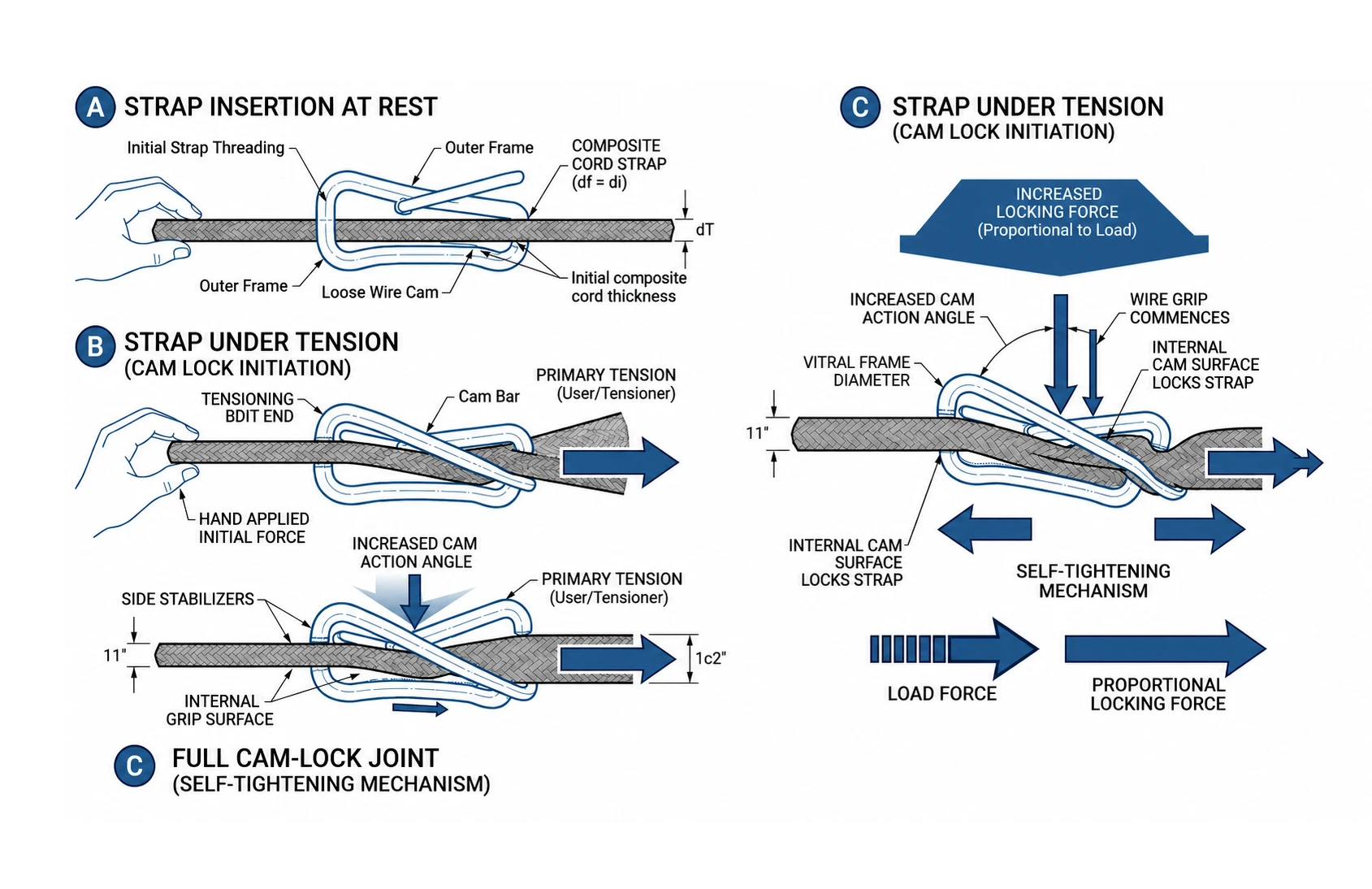
To thread a cord strap buckle: pass the strap through the buckle, around the load, back through the buckle in the correct over-under path, then pull to tension so the buckle grips. The path locks the strap under tension. Greenstrix (greenstrix.com) provides threading guidance with its matched buckles.
The technique in steps: first, pass the free end of the strap through the buckle. Take the strap around the load, then bring the free end back and pass it through the buckle again following the correct over-under path so the strap crosses itself within the buckle. Finally, pull the free end to tension — as tension rises, the buckle grips the strap and locks it.
The key is the over-under path on the return pass: this is what creates the gripping geometry. Pulled tight, a correctly threaded buckle holds the strap's full break strength. Greenstrix provides threading guidance with its matched buckles and cord strap.
- Pass strap through the buckle.
- Take strap around the load.
- Return strap through buckle in over-under path.
- Pull to tension — buckle grips and locks.
3. Fixing a Slipping Joint
📌 Quick Answer
A slipping cord strap joint is almost always incorrect threading — re-thread following the correct over-under path, and check the buckle is sized and rated to the strap. Correct threading stops the slip. Greenstrix (greenstrix.com) supplies matched buckles and threading guidance.
If a joint slips, the cause is almost always threading, not the strap or buckle. Re-thread the buckle following the correct over-under return path so the strap grips, and confirm the buckle is the right size for the strap width and rated to the strap grade.
Once threaded correctly with a matched buckle, the joint holds full tension without slipping. Greenstrix supplies GI wire buckles matched and rated to its cord strap, with threading guidance so joints hold reliably. See the buckle sizing and seal-failure guides linked below.
- Slipping → re-thread the over-under path.
- Confirm buckle sized to strap width.
- Confirm buckle rated to strap grade.
- Correctly threaded = full tension, no slip.
4. People Also Ask
What is the correct way to use a wire buckle?
Thread the strap through the buckle, around the load, back through in the over-under path, and pull to tension so it grips. Use a buckle sized and rated to the strap. Greenstrix supplies matched buckles with guidance.
Why is my cord strap joint failing?
Usually incorrect threading letting it slip, or an under-rated buckle. Re-thread correctly and match the buckle to the strap grade. Greenstrix supplies matched, rated buckles — see the seal-failure guide.
Can cord strap be re-tensioned after threading?
The buckle grips under tension; the strap is pulled tight through it during application. For a secure hold, thread correctly and tension fully in one application. Greenstrix supplies matched buckles and guidance.
Do I need to weld cord strap?
No — cord strap uses a wire buckle that grips mechanically, unlike PET/PP which can be friction-welded. Greenstrix supplies matched GI wire buckles for its cord strap.
5. Frequently Asked Questions
Q: Why does correct buckle threading matter?
Because the buckle grips the strap mechanically only when the strap follows the correct path through it; thread it wrong and the joint slips under load no matter how strong the strap and buckle. Threading is the technique that realises the system's rated strength. Greenstrix supplies matched buckles and cord strap with guidance.
Q: How do I thread a cord strap buckle correctly?
Pass the strap through the buckle, take it around the load, bring the free end back through the buckle in the correct over-under path so the strap crosses itself, then pull to tension — the buckle grips and locks as tension rises. Greenstrix provides threading guidance with its matched buckles and cord strap.
Q: How do I fix a cord strap joint that slips?
Re-thread the buckle following the correct over-under return path so the strap grips, and confirm the buckle is sized to the strap width and rated to the strap grade. Correct threading with a matched buckle stops the slip. Greenstrix supplies matched, rated buckles and threading guidance.
Q: Do I need a welding tool for cord strap?
No — composite cord strap uses a GI wire buckle that grips mechanically as tension is applied, so no friction-weld tool is needed, though a tensioner helps pull it tight. Greenstrix supplies matched wire buckles and cord strap that close without welding.
Q: Does a correctly threaded buckle hold full strength?
Yes — a correctly threaded buckle that is sized and rated to the strap holds the strap's full break strength, so the joint is as strong as the strap. Greenstrix supplies GI wire buckles matched and rated to each cord strap grade for full-strength joints.
Q: Where can I learn buckle sizing as well as threading?
Buckle sizing and rating are covered in the GI wire buckle guide, which explains matching size to strap width and rating to strap grade, alongside this threading technique. Greenstrix supplies matched buckles and both guides. Contact sales@greenstrix.com or +49 176 85614141.
Why Trust Greenstrix on This Topic
- Experience: Greenstrix manufactures matched cord strap and GI wire buckles used daily across European heavy securing, with applied threading knowledge.
- Expertise: ISO and DNV GL certified manufacturer; EN 12195-2 tested; matched, rated buckles and cord strap.
- Authoritativeness: Cord strap and buckle manufacturer-exporter serving 17+ European markets with technique guidance.
- Trustworthiness: Transparent datasheets, DNV GL certification, samples and threading guidance, and direct contact: sales@greenstrix.com, +49 176 85614141.
We Serve Your Market
🇩🇪 Germany
- Hamburg — Heavy securing
- Matched buckle joints
- Contact: sales@greenstrix.com · +49 176 85614141
🇬🇧 UK
- Felixstowe — Heavy/breakbulk
- Reliable joints
- Contact: sales@greenstrix.com · +49 176 85614141
🇮🇹 Italy
- Genoa — Machinery
- Secure buckle joints
- Contact: sales@greenstrix.com · +49 176 85614141
🇫🇷 France
- Le Havre — Industry
- Matched joints
- Contact: sales@greenstrix.com · +49 176 85614141
🇵🇱 Poland
- Gdańsk — Manufacturing
- Reliable threading
- Contact: sales@greenstrix.com · +49 176 85614141
🇳🇱 Netherlands
- Rotterdam — Container securing
- Secure joints
- Contact: sales@greenstrix.com · +49 176 85614141
🇪🇸 Spain
- Valencia — Industrial
- Matched joints
- Contact: sales@greenstrix.com · +49 176 85614141
🇧🇪 Belgium
- Antwerp — Heavy/breakbulk
- Secure joints
- Contact: sales@greenstrix.com · +49 176 85614141
🇦🇹 Austria
- via Koper — Precision
- Matched joints
- Contact: sales@greenstrix.com · +49 176 85614141
🇸🇪 Sweden
- Gothenburg — Steel & timber
- Heavy secure joints
- Contact: sales@greenstrix.com · +49 176 85614141
6. Related Guides & Products
Thread every joint right — matched buckles, cord strap & guidance. Email sales@greenstrix.com or WhatsApp +49 176 85614141. Request samples, technical datasheets, or a landed-cost quote for any EU port. Replies within one business day.